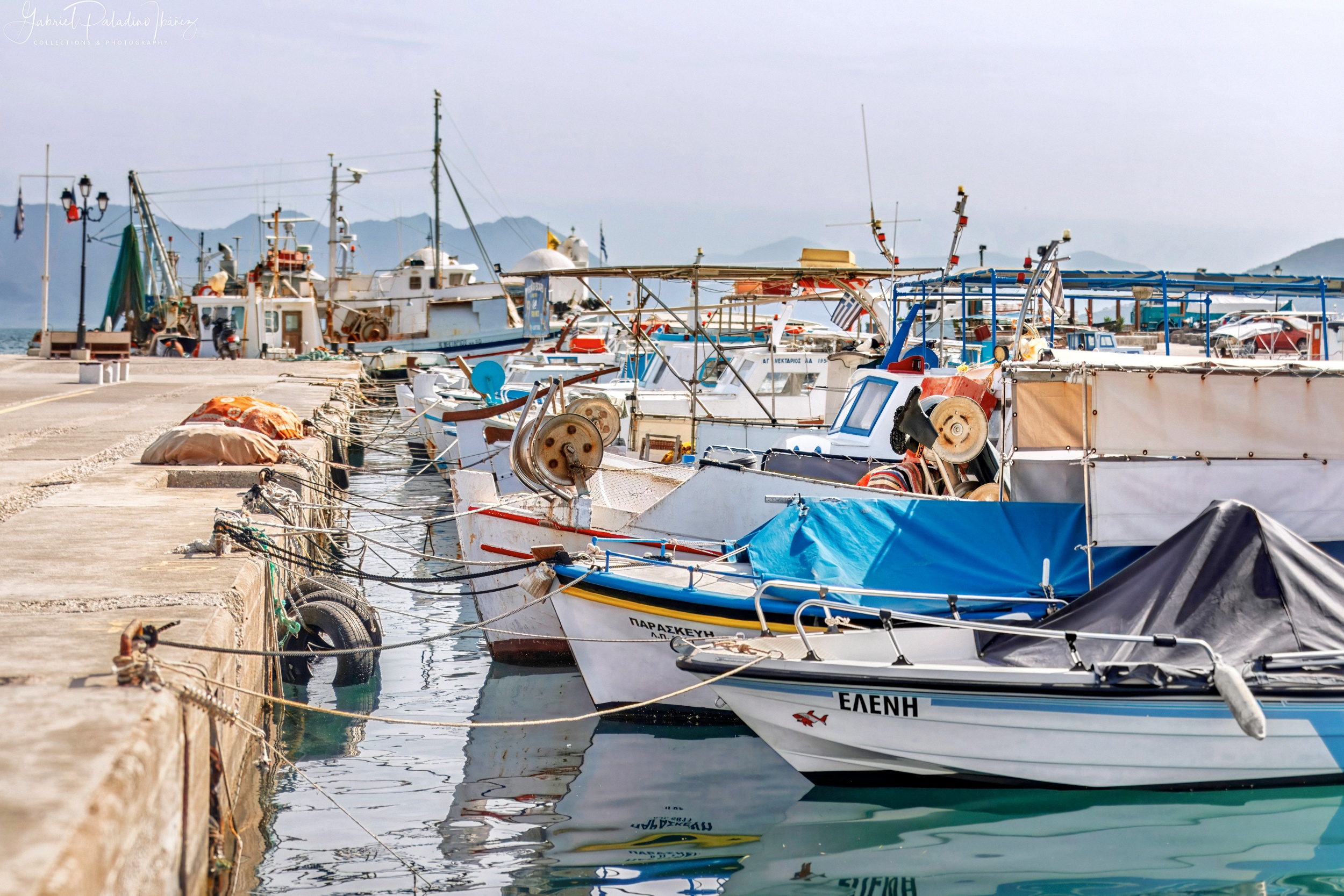
Between 1827 and 1829, Aegina briefly held a place at the heart of modern Greek history, serving as the first seat of government of the newly independent state before the capital shifted to Nafplio and later Athens. The neoclassical facades along the waterfront — pale walls and columned fronts rising behind the masts — remain as quiet reminders of that chapter.
Today, the harbor itself is defined less by history than by its working rhythm. Fishing boats, painted in the familiar blue and white of the island, cluster tightly along the quay. Mooring lines stretch across the water to the stone pier, nets lie bundled at the bows, and ropes mark the geometry of everyday labor.
At a glance, the scene feels timeless. The calm water reflects hulls and rigging, the air carries the subdued atmosphere of a Mediterranean port that has changed little across generations. Beyond the harbor, Aegina is known for its pistachio orchards and the Temple of Aphaia — a Doric monument dating to around 500 BC — but here at the waterfront, the island’s character is expressed most clearly in the persistence of its maritime tradition.
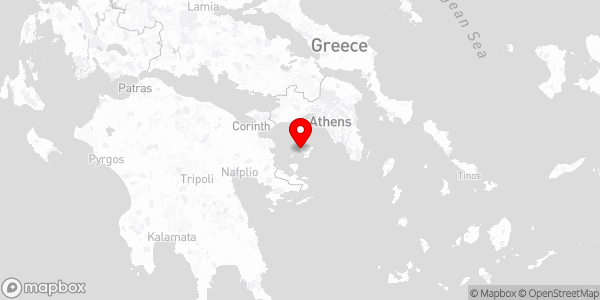
Aegina, Saronic Gulf, Greece
Camera: Canon EOS 77D / 9000D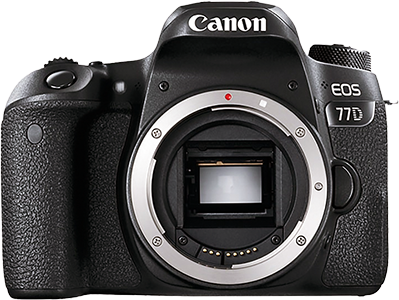
Lens: TAMRON SP 28-75mm F/2.8 Di A09E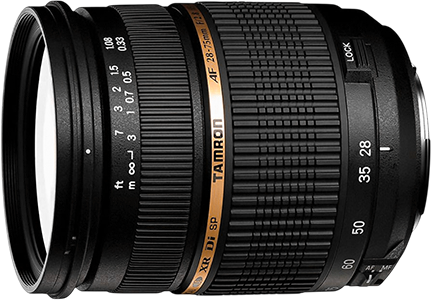
Capture Information:
Focal Length: 40.0 mm
Shutter Speed: 1/4000
Aperture: f/2.8
ISO: 100
Photo Taken: May 11, 2026
High resolution
Flickr Gallery