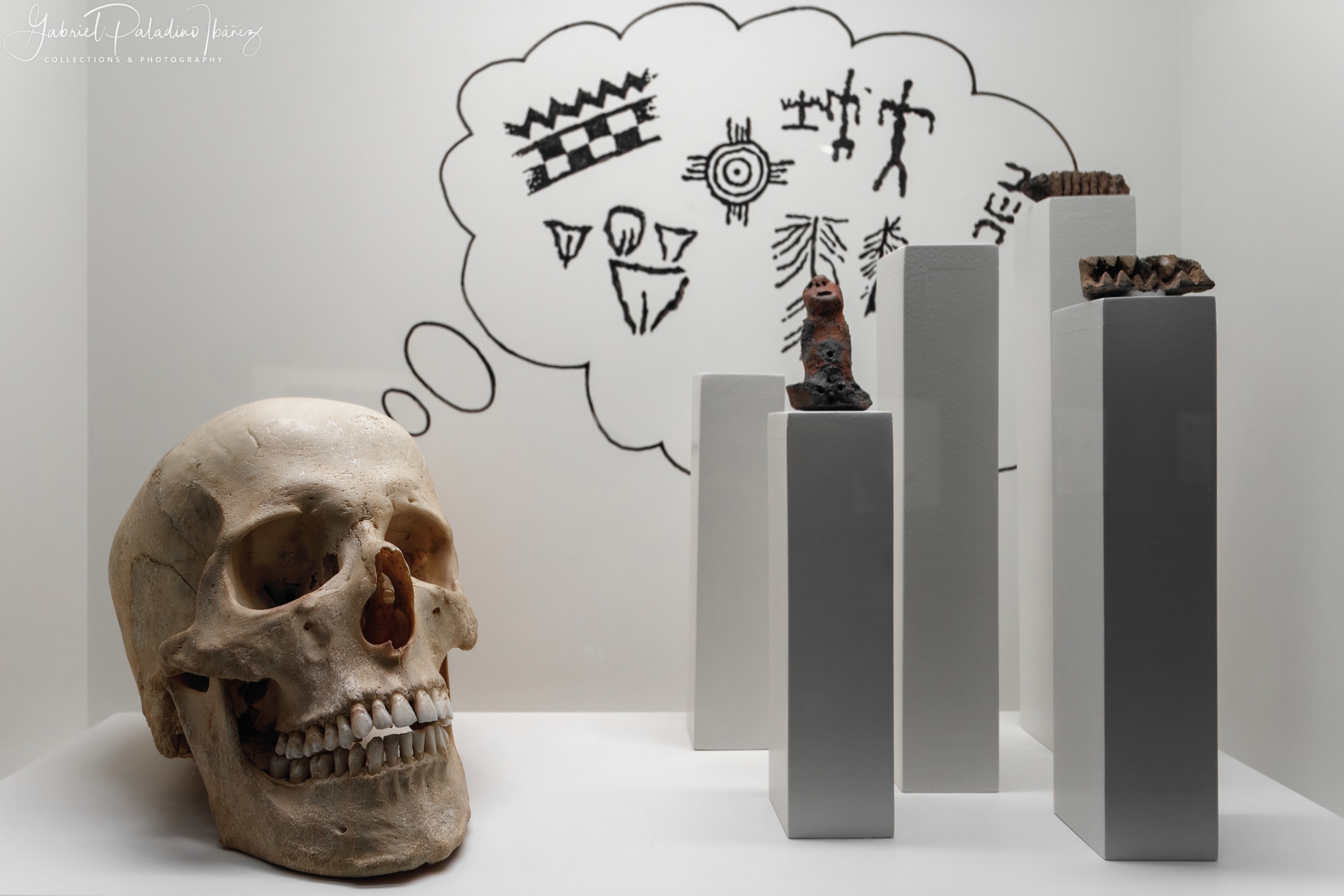
The Museo Canario (Canarian Museum) is located in the heart of the Vegueta neighborhood in Las Palmas and since 1879 is a scientific and cultural society dedicated to the study of archeology, prehistory and natural history of the Canary Islands. The visit through its rooms allows a regression to the ways of life of the settlers of Gran Canaria from the 5th century B.C. to the Castilian conquest of the island in the 15th century. It seems that the first settlers came from Africa and their ethnicity was Berber.
The ‘Antropología física’ (Physical Anthropology) room preserves the atmosphere of the first decades of the Canarian Museum’s existence. The exhibition of the large collection of skulls in the institution’s possession is intended to draw attention to a particular fact: from the end of the 19th century until well into the 20th century, an important part of the research on the pre-Hispanic past of the islands was focused on the metric and morphological analysis of the bone remains -especially skulls- of the aboriginal population, with the aim of elaborating a typological classification. In this way, a distinction was made between two large groups: a population with Cro-Magnon features and a population with mediterranoid features, in which it was intended to see two waves of settlement and to which differentiated cultural manifestations were associated. This led to a biological explanation of the aboriginal society, which remained in force until not many decades ago, hindering the knowledge about the ways of life of the ancient Canary Islanders.
Photo Taken: April 18, 2023
Did you like this post?