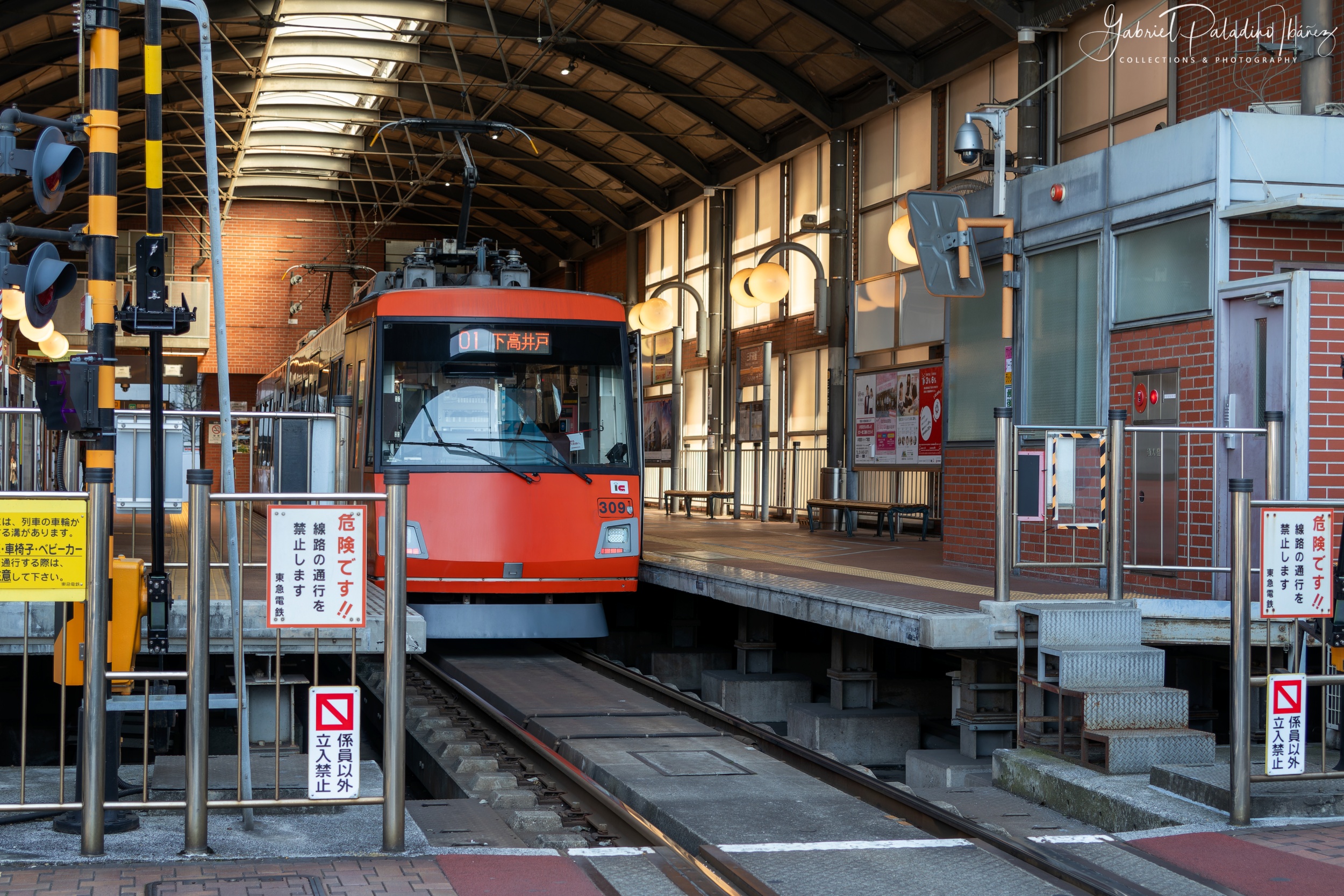
The Tokyu 300 series (東急300系, Tōkyū 300-kei) is a series of articulated trams built by Tokyu Car Corporation in 1999 for the Tōkyū Setagaya Line.
The 300 series is the only rolling stock used on Setagaya Line, a 5-km-long (or 3.1-miles-long) line in Setagaya City of Tokyo. The 1921 Act on Rail Tracks, the law that mostly regulates tram business, has been applied to the entire line so that it is sometimes regarded as a tram line in Japan. However, Setagaya Line is operated only on its own tracks so that it might be more appropriate to call it a light rail transit than a tramway.
The 300 series is formed of two coaches, and ten units were introduced in total. They replaced 70 series (in service: 1942-2000), 80 series (1950-2001) and 150 series (1964-2001). As a result, all Setagaya Line trains became accessible and environmentally friendly even with air conditioning.
Each unit is painted differently, and some of them have had their liveries changed. For example, the first unit is now so-called “Tamaden” livery, which is based on trams on Tokyu Tamagawa (completely different from that of today) and Kinuta Lines, which were permanently closed in 1969.
The nineth unit is painted “Burnt Orange”, apparently vivid.
The tenth unit is painted “Turquoise Green”. Three out of ten units have been painted green, the most common type of colour (though each of them is slightly different).
The cat train (the eighth unit). It is modelled after maneki-neko, a common Japanese figurine which is often believed to bring good luck to the business owner.
🚃 Location – Map
Sangenjaya Station (Tokyu Setagaya Line), Setagaya City, Tokyo, Japan
Photo Taken: April 09, 2024
Did you like this post?