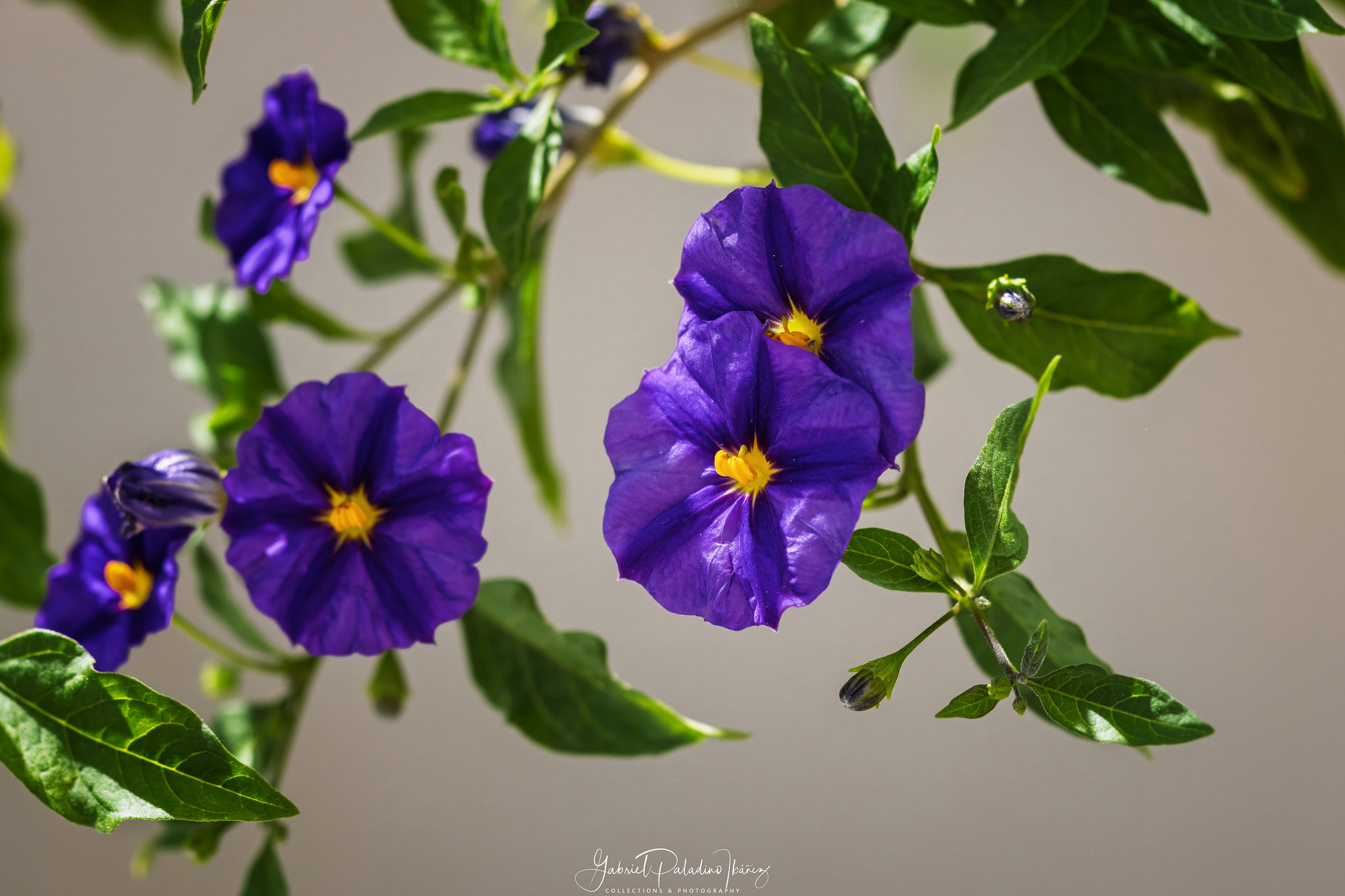
Solanum rantonnetii, the blue potato bush, belongs to the nightshade family (Solanaceae), the same family as the potato and the tomato. Many botanical authorities now classify it as Lycianthes rantonnetii, a genus of around 150 species spread across tropical America, Asia and the Pacific, though the older name remains in common use in horticulture. The species is native to South America, with a range that includes Argentina, Paraguay, Bolivia and Brazil. Its epithet honours Barthélémy Victor Rantonnet, a nineteenth-century French horticulturist.
It is a lax, evergreen shrub that reaches between 1.5 and 2.5 metres in height and spread. From summer to autumn it bears funnel-shaped flowers, two to three centimetres across, which open into a wide, almost flat corolla of deep violet with a yellow centre where the anthers gather. They are followed by small red berries that are toxic. The plant needs full sun and tolerates only mild frost, down to about −5 °C, so it does best in temperate and Mediterranean climates. In some regions, such as South Africa, it has escaped cultivation and is regarded as invasive.
• Blue potato bush, Paraguay nightshade
• Solano de flor azul, meloncillo del aire, liciantes
Scientific classification:
Kingdom:Plantae
Clade:Tracheophytes
Clade:Angiosperms
Clade:Eudicots
Clade:Asterids
Order:Solanales
Family:Solanaceae
Genus:Lycianthes
Species:L. rantonnetii
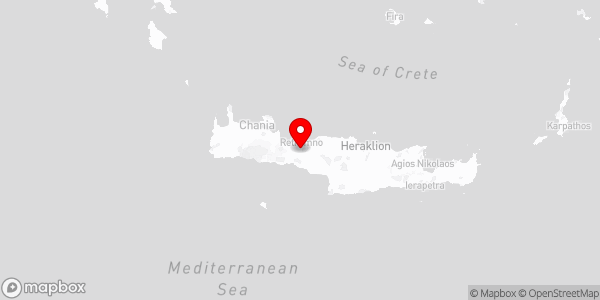
Armenoi, Crete, Greece
Camera: Canon EOS R7
Lens: Canon EF 100mm f/2.8L Macro IS USM
Capture Information:
Focal Length: 100.0 mm
Shutter Speed: 1/1250
Aperture: f/4.0
ISO: 200
Photo Taken: May 12, 2026
High resolution
Flickr Gallery