Hosios Loukas, nestled on the western slopes of Mount Helicon in Boeotia, central Greece, is one of the finest surviving monuments of Middle Byzantine art and architecture. Established in the 10th century in association with Saint Luke of Stiris, a revered hermit and ascetic who died in 953 AD, the monastery grew into a major pilgrimage center of the Byzantine world.
The complex is renowned for its exceptional architecture and artistic decoration. Its two principal churches—the Church of the Theotokos, built in the late 10th century and the oldest structure on the site, and the larger Katholikon of the early 11th century—preserve an extraordinary ensemble of gold-ground mosaics, marble revetments, and frescoes that rank among the masterpieces of Byzantine religious art. Their remarkable state of preservation offers a rare insight into the spiritual and artistic ideals of medieval Byzantium.
Closely associated with Orthodox monastic life and Christian pilgrimage for more than a millennium, Hosios Loukas remains an active religious site today. In 1990, it was inscribed on the UNESCO World Heritage List together with the monasteries of Daphni and Nea Moni of Chios, in recognition of its outstanding contribution to the cultural, artistic, and spiritual heritage of the Byzantine world.
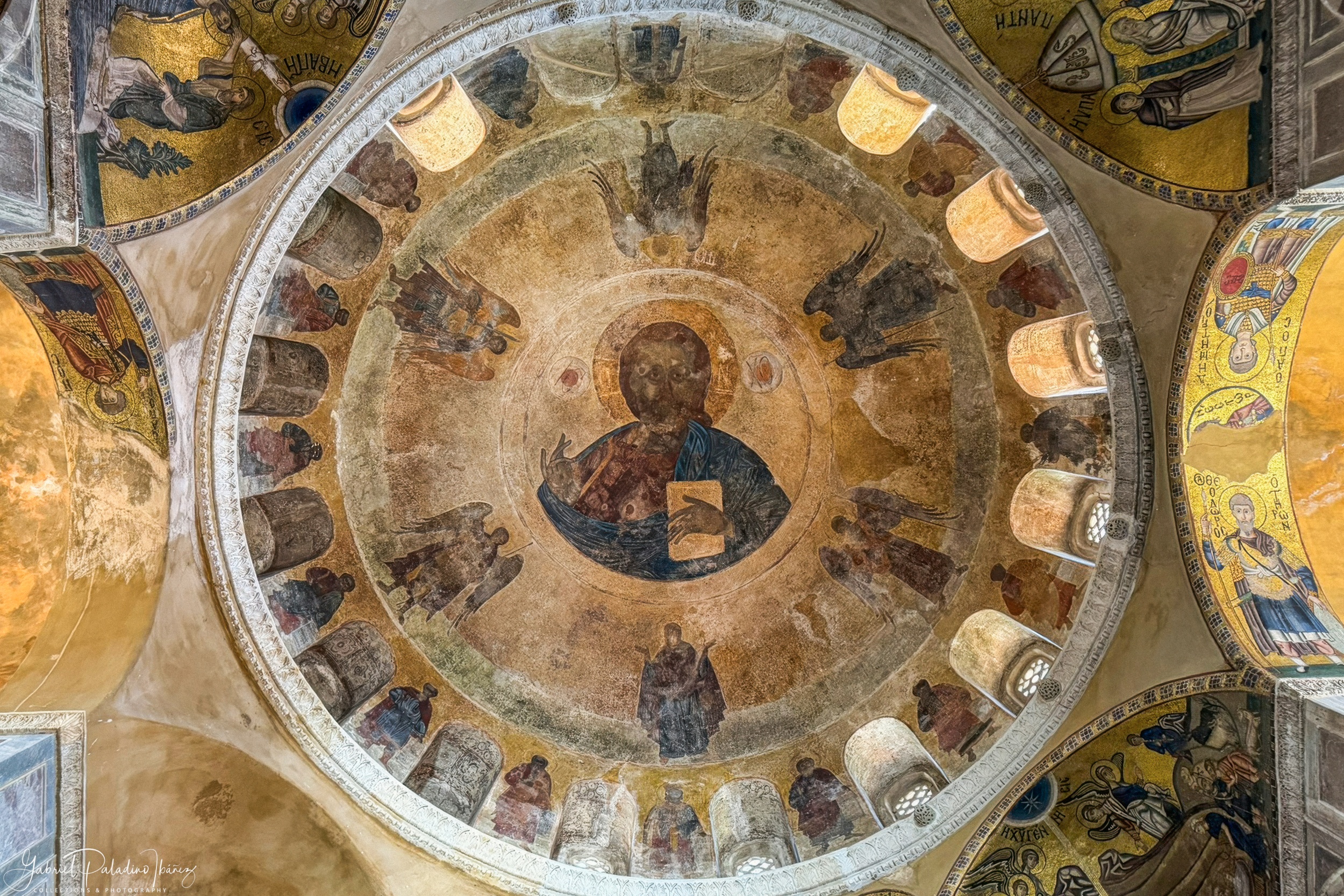
The image looks upward into the main dome of the Katholikon, where the figure of Christ Pantokrator — Ruler of All — presides from the summit of the sacred space. Though the original mosaic was lost, likely to the devastating earthquake of 1659, a later fresco preserves the essential iconographic scheme: Christ shown in half-figure, frontal and hieratic, holding the Book of the Gospels in his left hand while his right is raised in blessing. A ring of prophets encircles the medallion, bearing witness to the fulfillment of their scripture. The dome in Byzantine theology is not merely architecture — it is the vault of heaven itself, and Christ at its crown is the cosmic sovereign presiding over the earthly church below. Despite the ravages of time, the fresco retains a solemn, otherworldly gravity. Around it, in the pendentives and upper walls, the gold-ground mosaics of the Katholikon still gleam as they did a thousand years ago.
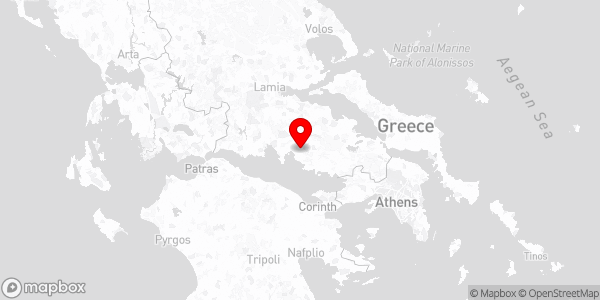
Steiri, Boeotia, Greece
Equipment: Apple iPhone 17 Pro Max
Capture Information:
Focal Length: 6.8 mm, Main lens (24mm eq.)
Shutter Speed: 1/60
Aperture: f/1.8
ISO: 640
Photo Taken: May 09, 2026
High resolution
Flickr Gallery