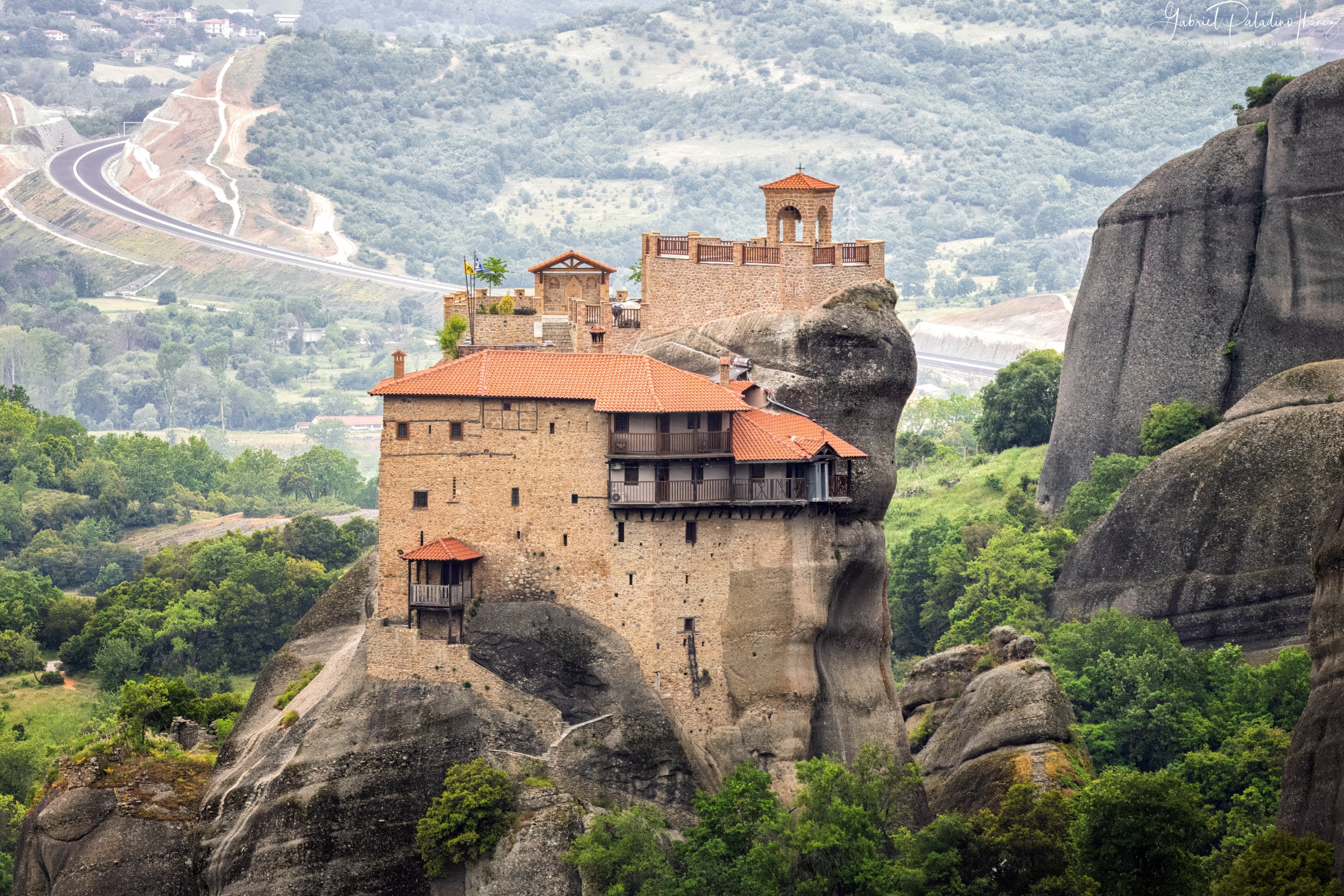
The Monastery of Saint Nicholas Anapausas (Agios Nikolaos Anapafsas) is one of the six officially active Eastern Orthodox monasteries of the Meteora complex in central Greece, inscribed as a UNESCO World Heritage Site in 1988. Perched atop a remarkably narrow rock pillar overlooking the Pineios Valley, it is the first monastery encountered when approaching the region from the village of Kastraki. Its architecture exemplifies the extraordinary adaptation of monastic life to Meteora’s dramatic and restrictive topography. Visitors reach the monastery via approximately eighty stone steps constructed between 1932 and 1936, which replaced the earlier removable ladders and rope-net systems once used by the monks.
Monastic activity on this site dates back to the fourteenth century. The earliest surviving structure is the small Chapel of Saint Anthony, whose walls preserve fragments of frescoes from this initial phase of monastic life on the rock. Because the summit offered very limited horizontal space, the monastery developed vertically across several levels, a characteristic that distinguishes it from other Meteora foundations and reflects the ingenuity required to adapt religious architecture to such a confined natural setting.
The monastery assumed its present form in the early sixteenth century, when Dionysios, Metropolitan of Larissa, and the monk Nikanor, Exarch of Stagon, sponsored the construction of the present Katholikon, dedicated to Saint Nicholas.
Its greatest artistic treasure is the cycle of frescoes painted in 1527 by Theophanes Strelitzas, known as Theophanes the Cretan, one of the foremost masters of the Cretan School and post-Byzantine painting. These murals are widely regarded as the earliest known signed works by the artist and constitute one of the most important artistic ensembles preserved at Meteora. Among their most notable scenes are the Second Coming (Last Judgment), the Dormition of Saint Ephraim the Syrian, and the rare depiction of Adam Naming the Animals, an unusual subject in monastic iconography.
The origin of the name "Anapausas" remains uncertain. It is traditionally interpreted as meaning "rest" or "repose," leading to the suggestion that the monastery may once have served as a resting place for pilgrims and monks travelling through Meteora before continuing toward the higher monasteries. However, this explanation cannot be confirmed by documentary evidence and should therefore be regarded as a traditional interpretation rather than an established historical fact.
After a period of decline and partial abandonment during the early twentieth century, the monastery was restored by the Greek Archaeological Service in the 1960s. Today, it remains one of Meteora’s officially active monasteries, maintaining a small resident monastic community while also serving as an important monument of historical, artistic, and religious heritage.
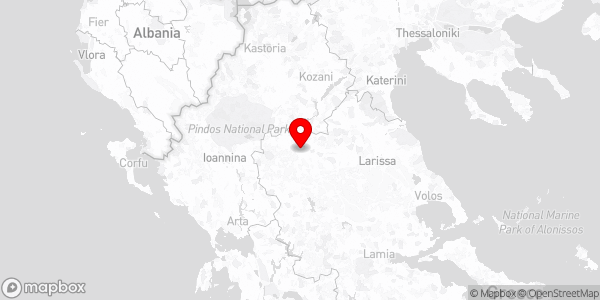
Meteora, Thessaly, Greece
Camera: Canon EOS R7
Lens: Sigma 150-600mm F5-6.3 DG OS HSM | Contemporary
Capture Information:
Focal Length: 205.0 mm
Shutter Speed: 1/1250
Aperture: f/5.6
ISO: 1600
Photo Taken: May 08, 2026
High resolution
Flickr Gallery