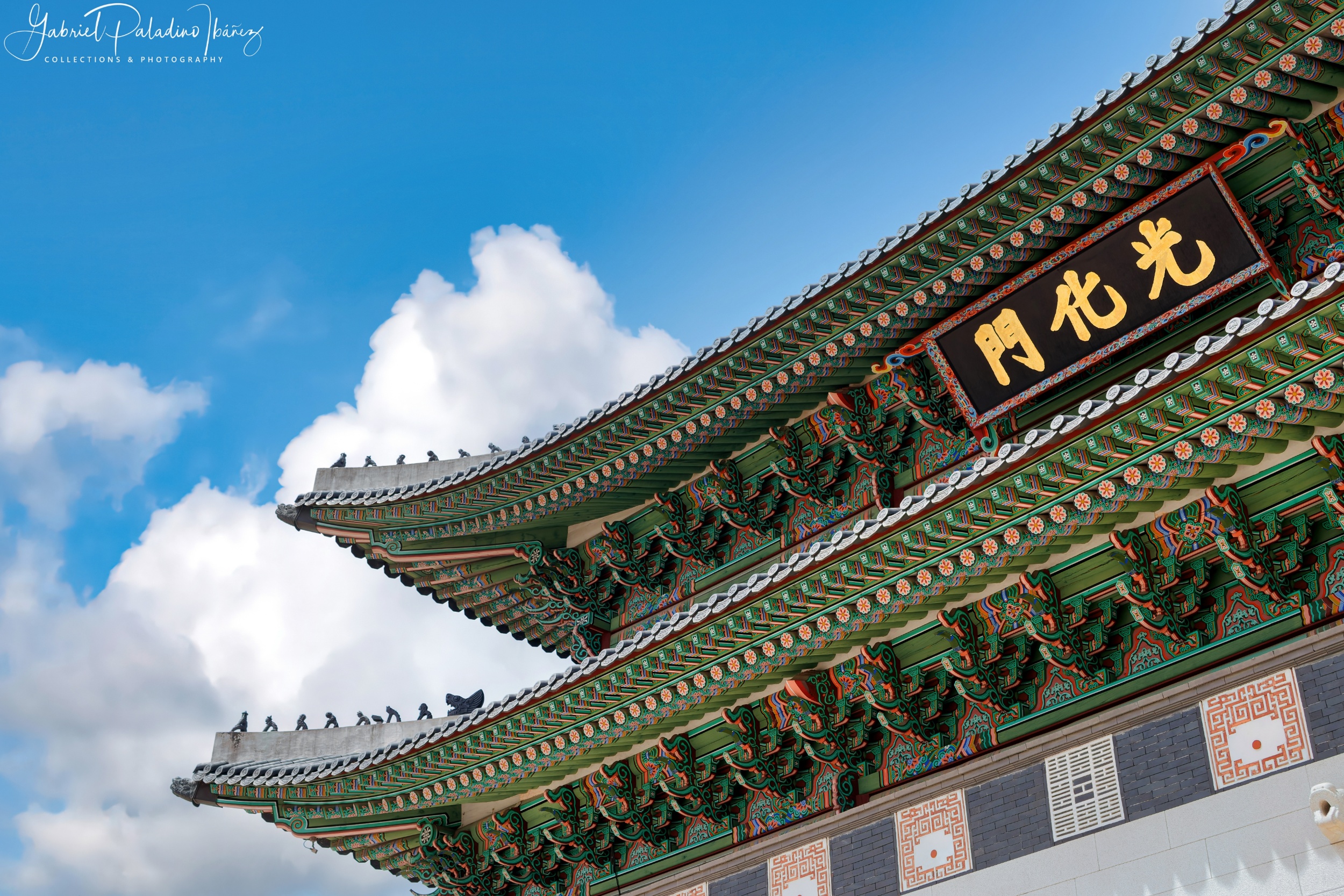
One of the things that most impressed me on my trip through Korea was the beautiful architecture and the striking colors. This led me to research Gwanghwamun, the majestic gate of Gyeongbokgung Palace.
Built in 1395, Gwanghwamun Gate (광화문, 光化門), or the “Gate of Illuminating Light,” is the main and southern gate of Gyeongbokgung Palace. The gate consists of three arched portals; the central arch was reserved for the king, while the flanking arches were used by the crown prince and high-ranking officials. The gate’s structure pairs tall granite ramparts with a two-story wooden gatehouse adorned with dancheong, a traditional multicolored painting. A name plaque, historically rendered in hanja, crowns the gatehouse.
Gwanghwamun has been damaged and rebuilt several times throughout history. It was first severely damaged during the Imjin War (1592-1598) and was not restored until 1864, during the reconstruction of Gyeongbokgung Palace. During the Japanese administration (1910-1945), Gwanghwamun was demolished and relocated. Further damage occurred during the Korean War (1950-1953), leaving only fragments of its original structure.
In 1968, a concrete version of the gate was rebuilt and returned to the south of the palace, but it was several meters off its historical footprint. A major reconstruction project began in 2006 to restore Gwanghwamun Gate to its original state and location. The project disassembled the concrete structure and replaced it with traditional granite and wood. After three years and eight months of work, the fully restored gate reopened to the public on August 15, 2010.
Sejong-ro, Jongno-gu, Seoul, South Korea
Camera: Canon EOS 800D / Rebel T7i
Lens: TAMRON SP 28-75mm F/2.8 Di A09E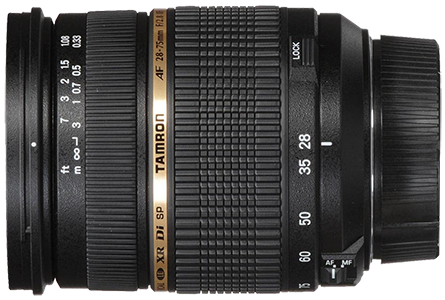
Photo Taken: May 08, 2025
High resolution
Flickr Gallery
Did you like this post?