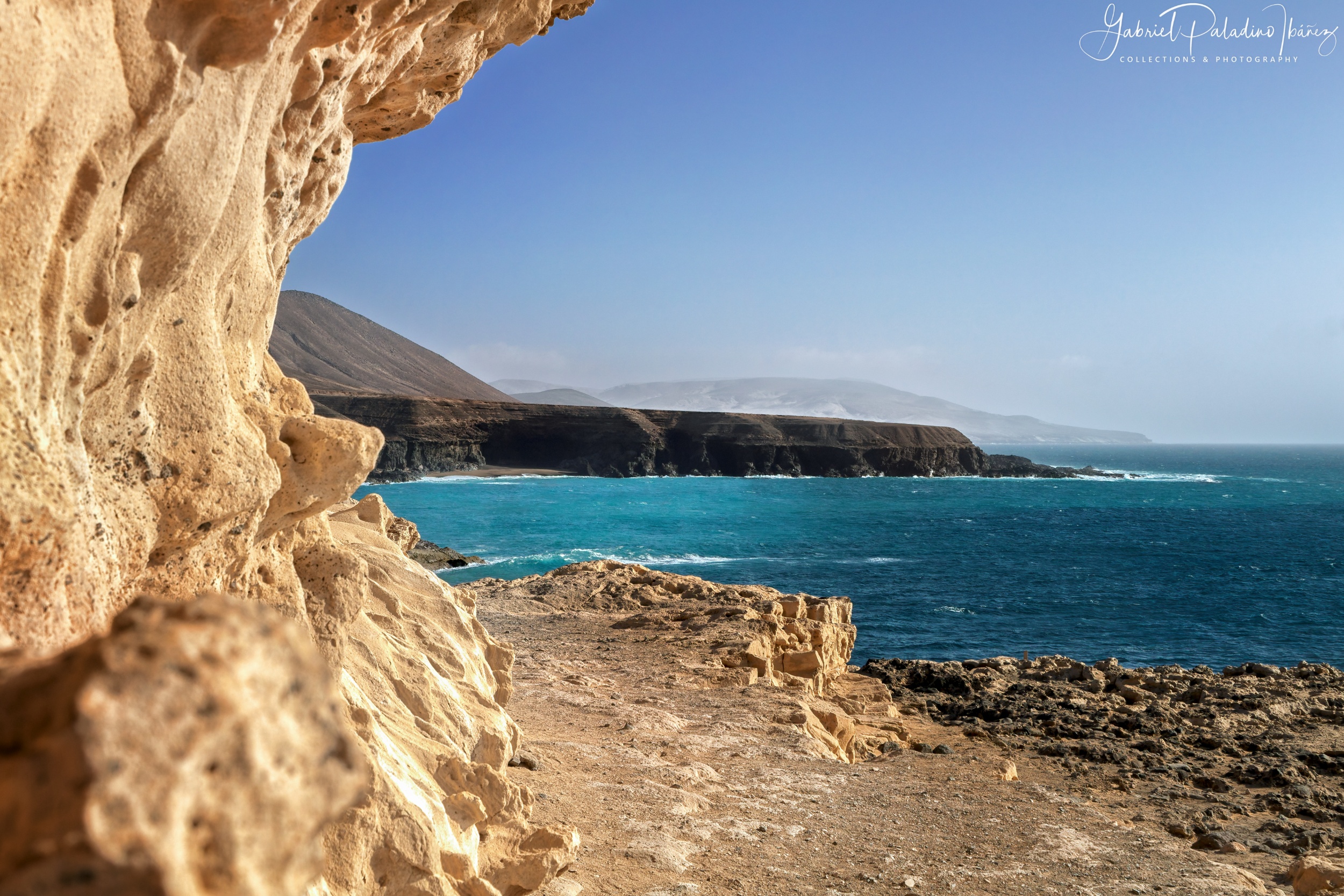
The Ajuy’s Fossil Dunes stand as a striking testament to Fuerteventura’s deep geological past. Situated along the path leading to the famous caves, these magnificent sand walls are not ordinary rock formations. They are a specific type of sedimentary rock known as calcarenite, formed during the Pliocene epoch, approximately 2 to 5 million years ago. The process responsible for their creation is called lithification, a natural phenomenon where ancient dunes composed of loose sand and the remains of marine organisms were compacted and cemented together, solidifying into the stone walls we see today.
This formation process left behind a wealth of valuable information within the rock itself. These fossilized dunes are rich with marine fossils, including ancient shells and algae, which provide a direct record of the island’s formation and the environmental conditions that shaped it millions of years ago. This geological marvel is a key part of the dramatic coastal landscape, which also includes the famous volcanic caves and the black sand beach. The entire site, located on the island’s western coast within the protected Betancuria Rural Park, is of immense importance for anyone studying the natural history of the Canary Islands.
Camera: Canon EOS 750D / Rebel T6i
Lens: TAMRON SP 28-75mm F/2.8 Di A09E
Photo Taken: April 15, 2023
High resolution
Flickr Gallery
Did you like this post?