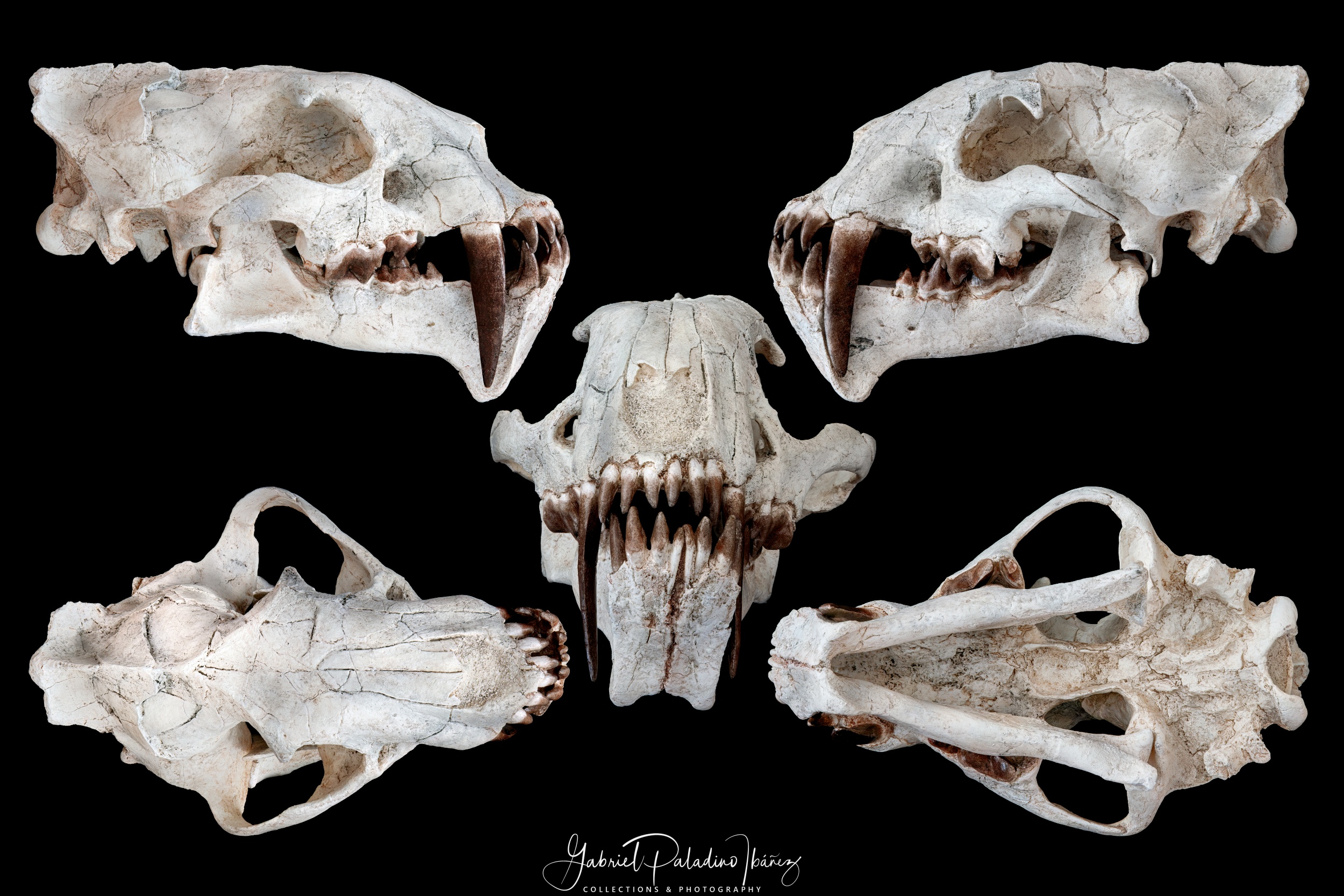
Hoplophoneus primaevus was an extinct carnivore that lived in North America during the Early Oligocene, approximately 34 to 30.5 million years ago. It belonged to the genus Hoplophoneus, which ranged more broadly from the Late Eocene to Early Oligocene (~37 to 30 million years ago), and was part of the Nimravidae family—often referred to as “false saber-toothed cats.” Despite their feline-like appearance, nimravids formed a separate evolutionary branch within Carnivora. The name Hoplophoneus comes from the Greek words for “weapon” (hoplo) and “murder” (phonos)—a fitting name for an apex predator equipped with elongated saber-like canines.
Scientific classification:
Domain: Eukaryota
Kingdom: Animalia
Phylum: Chordata
Class: Mammalia
Order: Carnivora
Suborder: Feliformia
Family: †Nimravidae
Subfamily: †Nimravinae
Genus: †Hoplophoneus
Key species within the genus Hoplophoneus:
Type species:
†Hoplophoneus primaevus (described by Cope in 1874).
Other species:
†Hoplophoneus occidentalis – larger size, with more robust canines.
†Hoplophoneus mentalis – more ancient form, present in the Late Eocene.
†Hoplophoneus dakotensis – characterized by a more elongated skull.
†Hoplophoneus oreodontis – likely specialized in preying on oreodonts.
The skull of H. primaevus presents many of the hallmarks of the genus: prominent upper canines, flanged lower jaws to protect those teeth when the mouth was closed, deep zygomatic arches for strong bite musculature, and a shortened snout. Its limb proportions—short and sturdy—suggest it was an ambush predator, capable of short bursts of speed but not extended chases. Like other nimravids, it likely hunted from cover, quickly overpowering prey with a powerful, slashing bite.
This cast was produced from a remarkably complete original specimen, with only 15% restoration and a unique, naturally occurring coloration. The replica faithfully preserves the most iconic features of Hoplophoneus—its extended saber canines, recessed eye sockets, and muscular jaw contours—capturing the lethal elegance of one of the most specialized predators of its time.
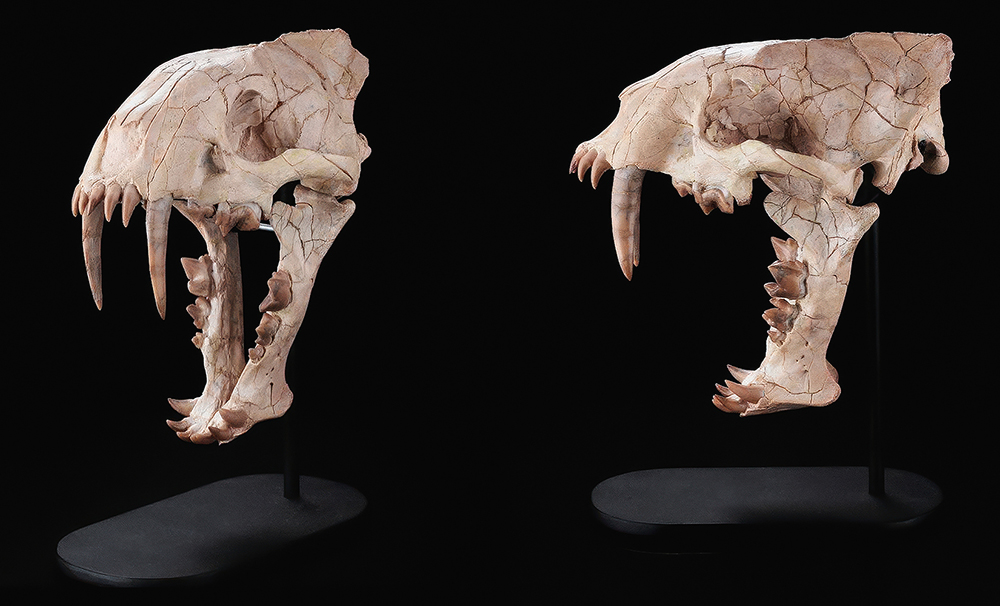
Photo Taken: May 25, 2025
High resolution
Flickr Gallery
Did you like this post?