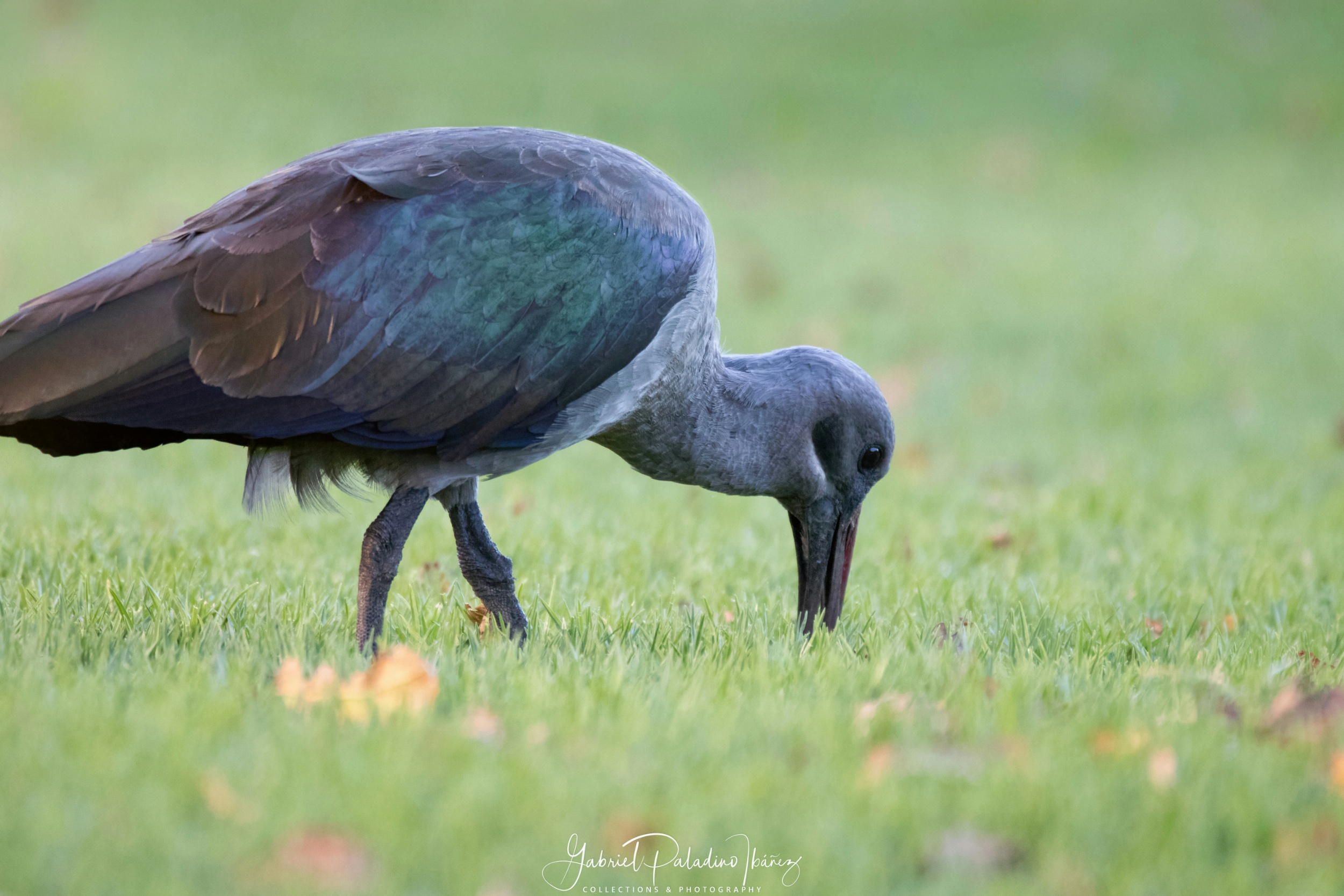
The Hadeda ibis (Bostrychia hagedash) uses a feeding strategy known as probe foraging, inserting its long, curved bill into soft substrates to search for underground prey such as earthworms and insects. This behavior is supported by a specialized sensory adaptation called remote-touch.
At the tip of the bill lies the bill-tip organ, containing tens of thousands of sensory pits embedded in the bone. This structure enables the detection of minute vibrations produced by moving prey, allowing the bird to locate hidden organisms without visual cues.
Experimental studies have shown that the effectiveness of remote-touch is strongly influenced by soil moisture. In wet soils, vibrations transmit more efficiently, significantly increasing prey detection rates. In contrast, dry conditions reduce this ability, forcing the ibis to rely on random probing.
• Hadada / Hadeda ibis
• Ibis hadada
Scientific classification:
Kingdom:Animalia
Phylum:Chordata
Class:Aves
Order:Pelecaniformes
Family:Threskiornithidae
Genus:Bostrychia
Species:B. hagedash
Kirstenbosch National Botanical Garden, Cape Town, South Africa
Photo Taken: March 16, 2018
High resolution
Flickr Gallery
Did you like this post?