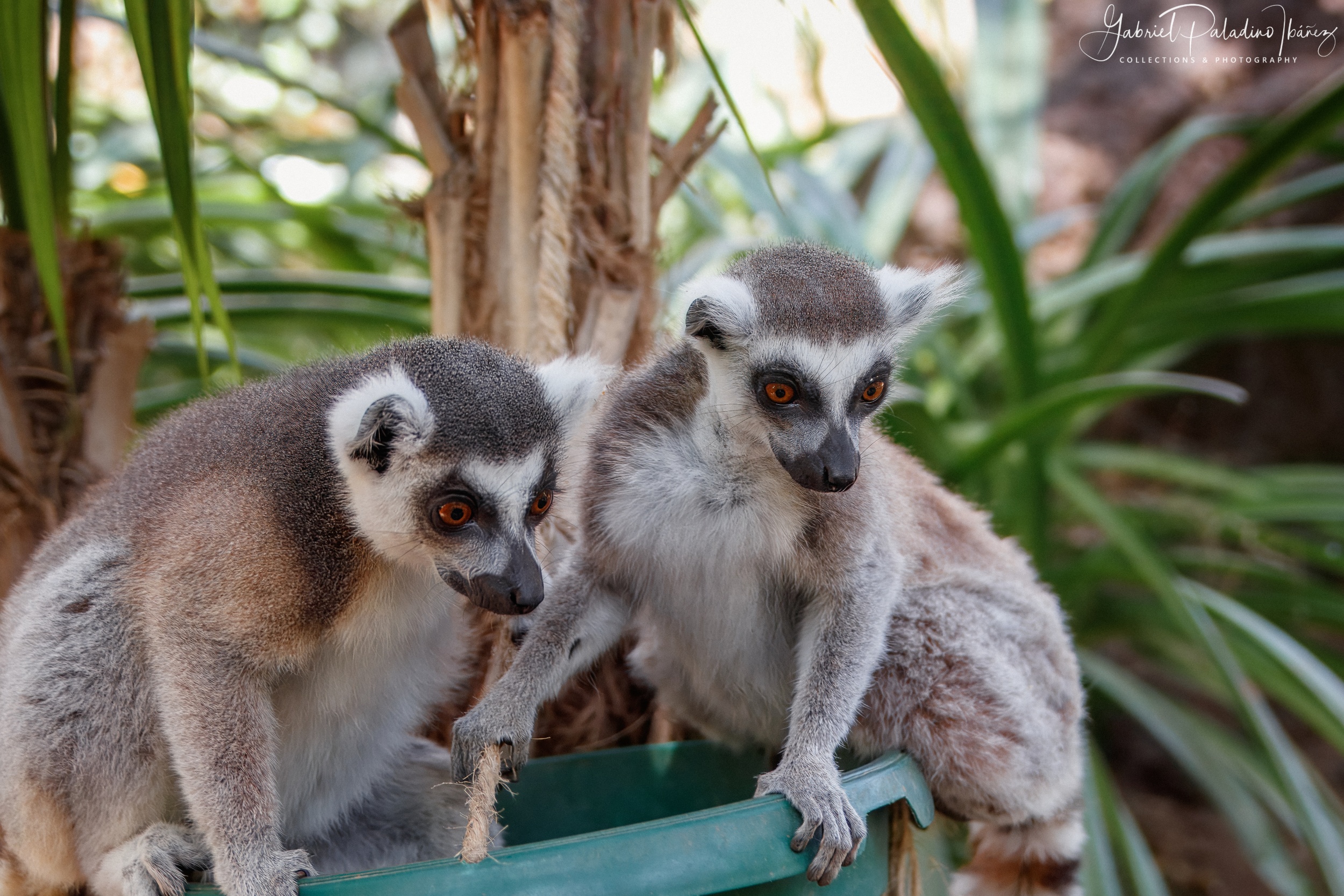
Ring-tailed lemurs (Lemur catta) are characterized by their gray to rosy brown backs, gray limbs, and dark gray heads and necks, with tails featuring 13 alternating black and white bands. Unlike most lemurs, they spend 40% of their time on the ground, moving quadrupedally.
These primates, known as the “gardeners of the forest,” play a crucial role in seed distribution and plant pollination. They inhabit southwestern Madagascar, living in arid areas and forests within territories of 15 to 57 acres (0.06 to 0.2 square kilometers). Ring-tailed lemurs live in groups of 3 to 25 individuals, with females being dominant. They are territorial and communicate through vocalizations and facial expressions.
The International Union for Conservation of Nature (IUCN) lists the ring-tailed lemur as Endangered (IUCN, 2018). Despite their adaptability, they are severely impacted by deforestation in Madagascar, primarily due to sapphire mining, which leads to habitat fragmentation. This isolation from resources and other lemur groups significantly contributes to their endangered status.
• Ring-tailed lemur
• Lémur colianillado, lémur de cola anillada, maki de cola anillada
Scientific classification:
Domain:Eukaryota
Kingdom:Animalia
Phylum:Chordata
Class:Mammalia
Order:Primates
Suborder:Strepsirrhini
Family:Lemuridae
Genus:Lemur
Species:L. catta
Lemur experience – Oasis Wildlife Fuerteventura
La Lajita, Fuerteventura, Islas Canarias
Photo Taken: April 16, 2023
Did you like this post?