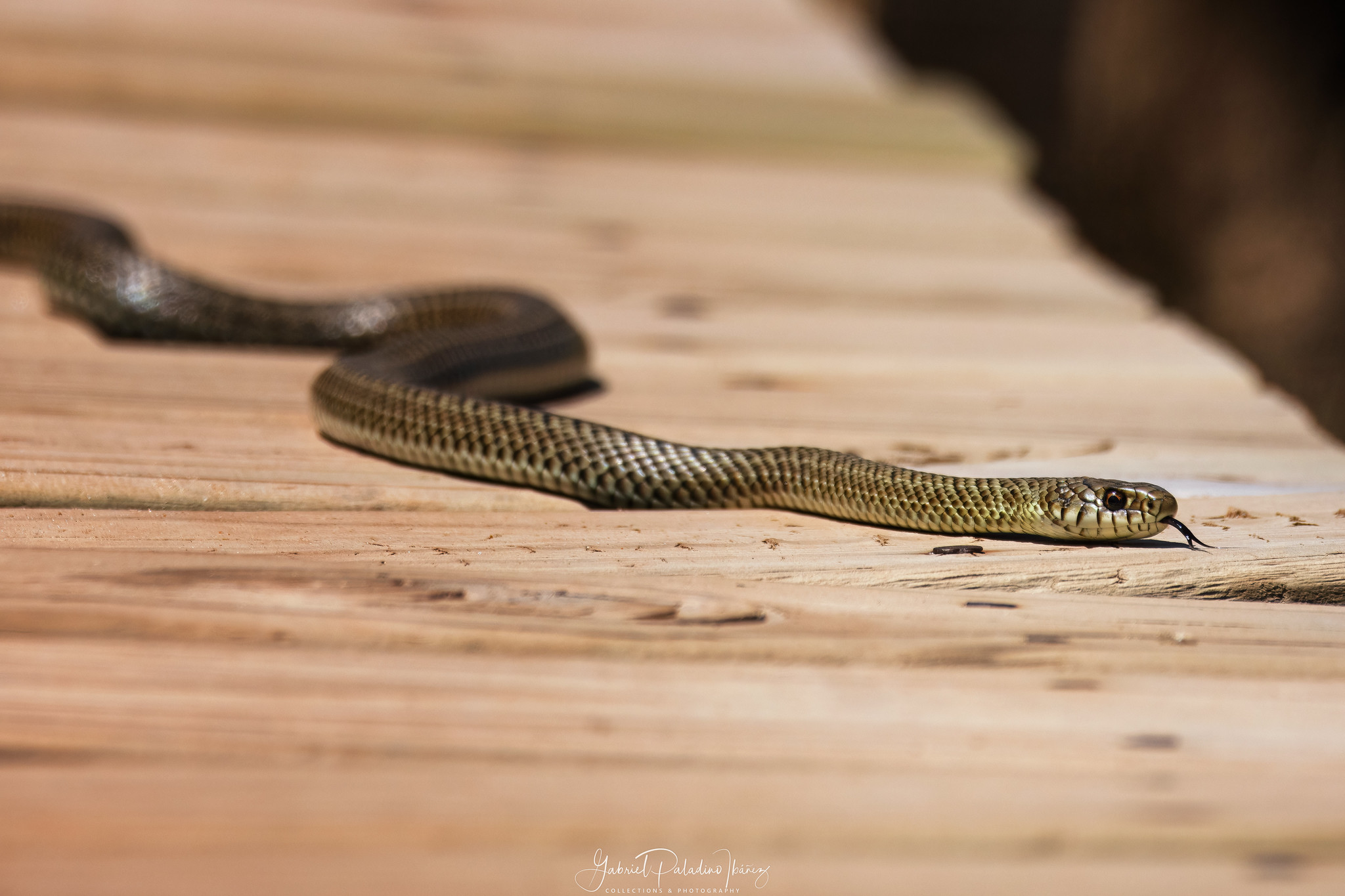
The specific name points to Patagonia, yet the Patagonian green racer, known in Uruguay as parejera or culebra del pastizal, lives mostly far to the north and east, across open country from northern Argentina to northeastern Brazil. Girard described it in 1858 from the mouth of the Río Negro, in Argentina.
Adults reach about 1.5 m. The dorsum is olive to grayish brown, the belly yellowish, and the eye is large with a round pupil. It is one of the most abundant snakes in Uruguay, present in grasslands, rocky ground, sandy areas and the margins of human settlements, and it basks in full sun on rocks and road edges.
Its diet is broad: frogs, toads, lizards, nestling birds, small rodents, spiders and other snakes, including its own species. Juveniles take mostly ectothermic prey, adults mostly endothermic. It is rear-fanged: grooved teeth at the back of the jaw carry the secretion of the Duvernoy’s gland, a venom with neurotoxic and myotoxic components used chiefly to subdue prey.
Breeding takes place in spring and summer. Females lay between 3 and 26 white eggs inside nests of Acromyrmex leaf-cutting ants, whose stable temperature carries the clutch through roughly sixty days of incubation. The IUCN lists the species as Least Concern.
• Parejera, culebra del pastizal
• Patagonian green racer
• Parelheira, corre-campo
Scientific classification:
Kingdom: Animalia
Phylum: Chordata
Class: Reptilia
Order: Squamata
Family: Colubridae
Genus: Philodryas
Species: Philodryas patagoniensis
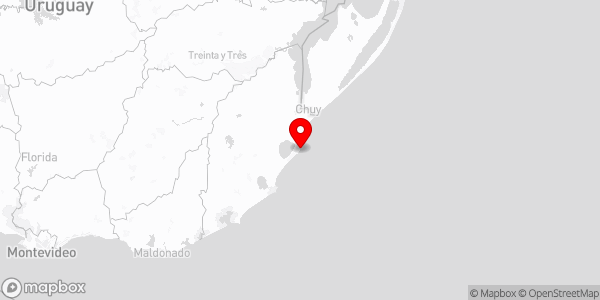
Punta del Diablo, Rocha, Uruguay
Camera: Canon EOS R7
Lens: Sigma 150-600mm F5-6.3 DG OS HSM | Contemporary
Capture Information:
Focal Length: 435.0 mm
Shutter Speed: 1/2500
Aperture: f/7.1
ISO: 320
Photo Taken: October 26, 2026
High resolution
Flickr Gallery