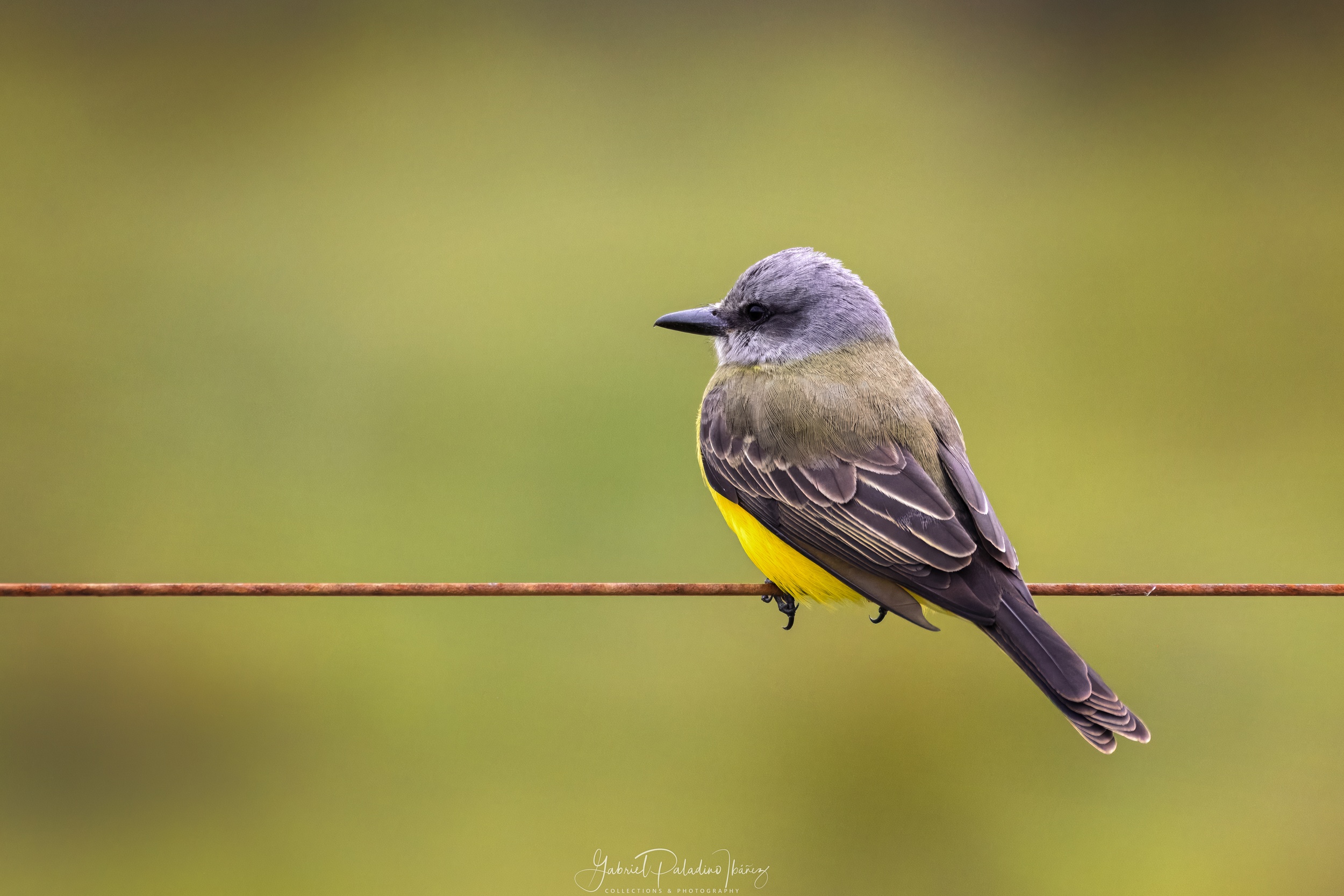
The Tropical Kingbird’s name goes back to Félix de Azara, who recorded it in Paraguay in the early 1800s as the “Suirirí-guazú”, the large suirirí in Guaraní usage. Azara remarked that its mood seemed sad, and Louis Pierre Vieillot, drawing on that account, formalised the species in 1819 as Tyrannus melancholicus, with Paraguay as its type locality. The epithet descends from the Greek melankholia, “black bile”, the humour that ancient and medieval medicine held responsible for gloom and irascibility, and reference works gloss it as both melancholic and bad-tempered. Both readings suit the bird: Azara also noted the obstinacy with which it defends its nest against dogs, cats and other birds, and the genus name Tyrannus, applied by Linnaeus in 1758 to the tyrant flycatchers, completes the picture of a morose tyrant.
It breeds from southern Arizona and the Rio Grande Valley of Texas through Central America and across most of South America, reaching central Argentina. In Uruguay the nominate subspecies is a summer resident: after breeding, southern populations move north into tropical South America, where they join resident birds. Throughout this range it occupies open and semi-open country with scattered trees, forest edges, farmland, parks and gardens, and favours fences, utility wires and other exposed perches.
The adult measures about 22 cm. The head is pale grey with a darker eye mask, the upperparts are olive-grey, the throat is whitish and the belly is bright yellow. The bill is black and heavy, the brown tail is slightly forked, and a concealed orange crown patch shows when the crest is raised. Males and females look alike.
It hunts by short aerial sallies from a prominent perch, returning to the same spot or to another nearby. Prey includes wasps, bees, beetles, moths, butterflies, dragonflies and grasshoppers, and small fruits supplement the diet when they are abundant. Pairs defend their nesting territory actively, including against raptors. The nest is an open cup of twigs, grasses and plant fibres set in the fork of a tree several metres above the ground, and the clutch usually numbers two to four eggs. The voice, a series of sharp, high-pitched trills and whistles, is often heard before dawn.
Its tolerance of human-altered landscapes has favoured its expansion, and the global population is estimated at around 200 million birds. The IUCN classifies it as Least Concern.
• Tropical Kingbird
• Suirirí real, Benteveo real
Scientific classification:
Kingdom: Animalia
Phylum: Chordata
Class: Aves
Order: Passeriformes
Family: Tyrannidae
Genus: Tyrannus
Species: T. melancholicus
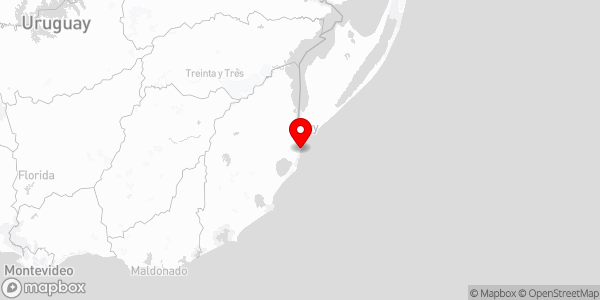
La Coronilla, Rocha, Uruguay
Camera: Canon EOS R7
Lens: Sigma 150-600mm F5-6.3 DG OS HSM | Contemporary
Capture Information:
Focal Length: 600.0 mm
Shutter Speed: 1/1000
Aperture: f/7.1
ISO: 1000
Photo Taken: October 27, 2026
High resolution
Flickr Gallery