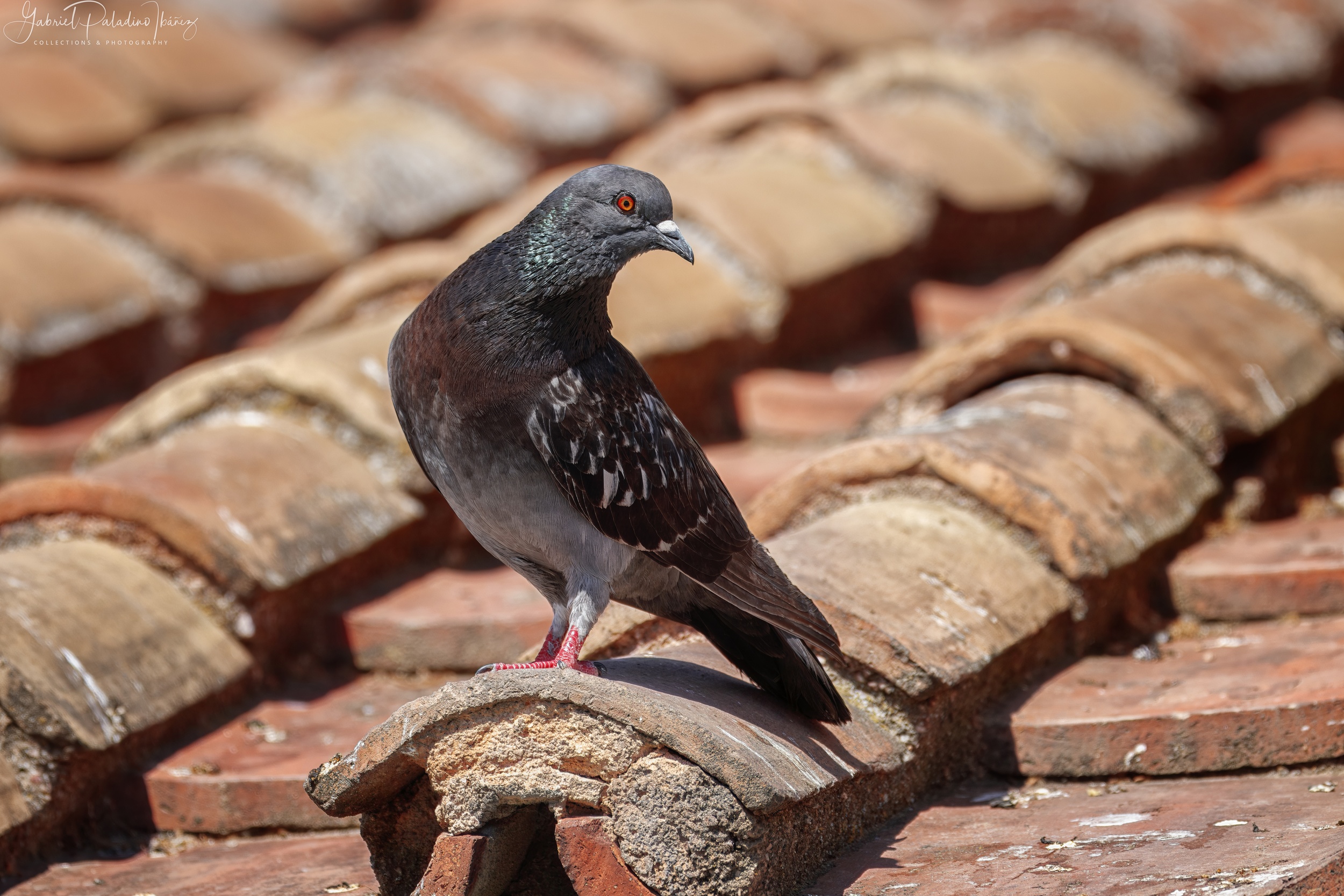
Each feral pigeon records the history of the people who kept its ancestors. The rock dove, Columba livia, is native to Europe, North Africa, the Middle East and South Asia, and its relationship with humans reaches back more than 3,000 years: pigeon bones from Late Bronze Age Cyprus point to semi-domestication around 1400 BCE, and Mesopotamian tablets mention pigeon keeping more than 5,000 years ago.
Breeders in many regions turned that one wild species into hundreds of domestic breeds, and birds that escaped from lofts and dovecotes joined city flocks, bringing their colors with them. Genomic work shows how deep the exchange runs: the checker pattern entered domestic pigeons from the African speckled pigeon, and escaped racing pigeons keep adding to the gene pool of urban birds.
The wild type is gray-blue, with two dark bars on each wing and an iridescent neck. Its descendants add black spread birds, ash-red and brown forms, checkers, pied and white individuals, and every blend between them. Each flock carries its own mixture, shaped by the breeds, the history and the conditions of its place.
This dark bird, with a brown wash and white flecking on its wings, is one expression of that mixture.
Thissio, Athens, Greece

Camera: Canon EOS 77D / 9000D
Lens: Sigma 150-600mm F5-6.3 DG OS HSM | Contemporary
Capture Information:
Focal Length: 283.0 mm
Shutter Speed: 1/400
Aperture: f/5.6
ISO: 200
Photo Taken: May 05, 2026
High resolution
Flickr Gallery