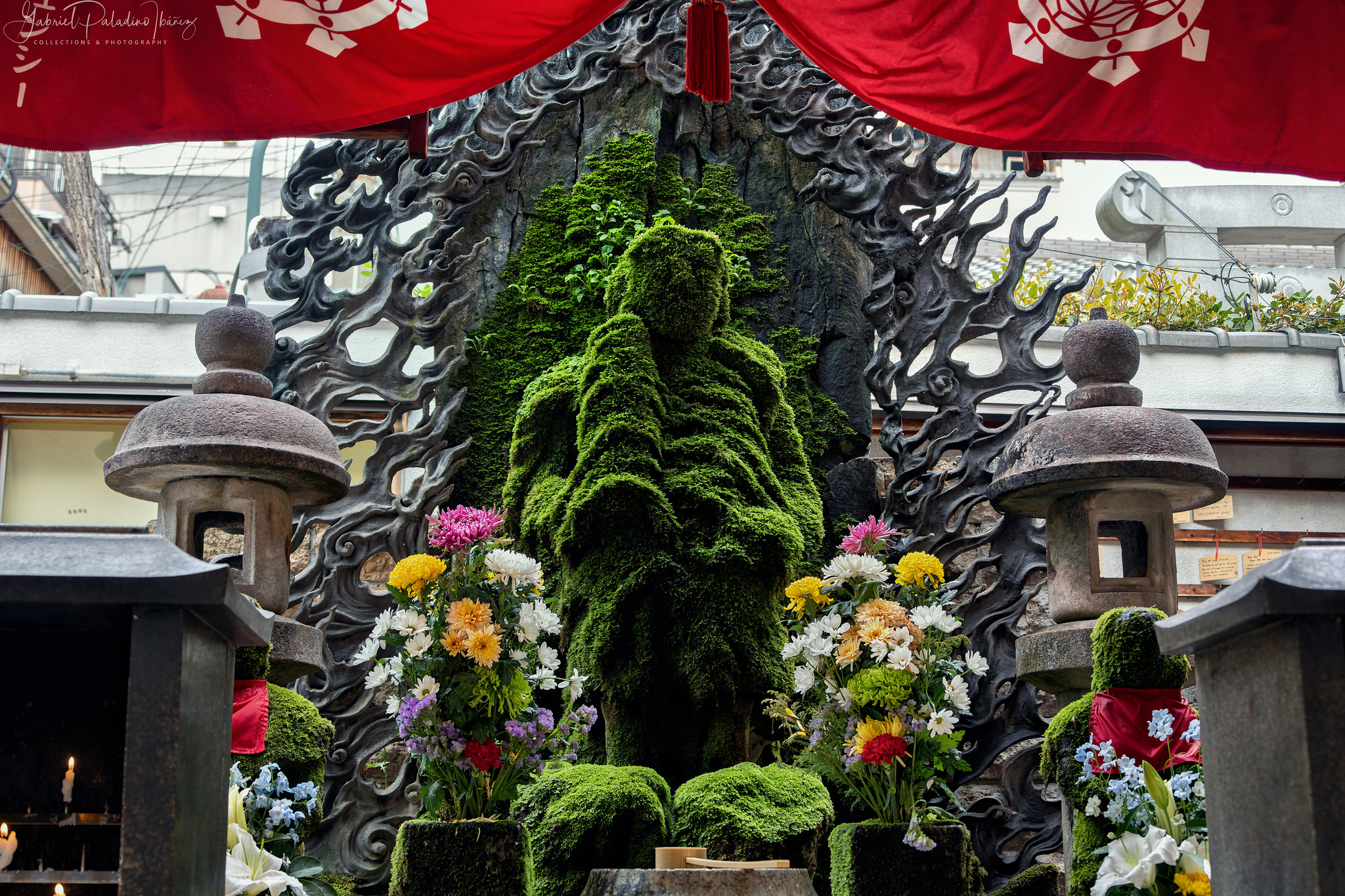
Hōzen-ji (法善寺), commonly known as Hōzenji Mizukake Fudōson, is a Buddhist temple of the Jōdo-shū (Pure Land) sect located in Chūō Ward, Ōsaka, Japan, near the Namba district. The temple was originally established in Uji, in present-day Kyōto Prefecture, and was relocated to its current location in 1637 by the priest Chūyō Sen’nen. Since the Edo period, it has remained an active religious institution and an enduring part of Ōsaka’s historical and cultural landscape.
The principal object of veneration is a stone statue of Fudō Myōō (Acala), one of the Buddhist Wisdom Kings. Commonly known as Mizukake Fudō, meaning “Water-Splashing Fudō,” the statue is the focus of a longstanding devotional practice in which worshippers pour water over the image while offering prayers. As a result of this continuous practice, the statue has become almost entirely covered with green moss. The image is accompanied by two traditional attendant figures, Kongara Dōji and Seitaka Dōji, who are closely associated with Fudō Myōō in Japanese Buddhist iconography.
Hōzen-ji is closely connected with the historical development of the surrounding Sennichimae district. Temple records associate the district’s name with memorial prayers conducted over a period of one thousand days by Chūyō Sen’nen. During the Edo period, the area evolved into a center of entertainment and performing arts, including kabuki, bunraku and rakugo, and the temple maintained ties to the cultural life of the neighborhood.
On 13 March 1945, air raids on Ōsaka destroyed most of the temple’s wooden buildings. The stone statue of Mizukake Fudō survived the destruction and remained the central object of devotion. Following the war, the temple precinct was rebuilt, while the nearby stone-paved alley known as Hōzenji Yokochō retained its historical association with the site. Additional religious structures within the grounds include Kōnpiradō Hall and other devotional spaces. Hōzen-ji continues to function as an active Buddhist temple and remains an important example of the interaction between religious practice, urban history and local cultural traditions in Ōsaka.
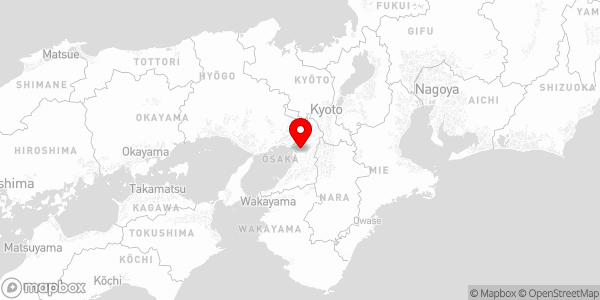
Sennichimae, Chūō Ward, Ōsaka, Japan
Camera: Canon EOS 800D / Rebel T7i / Kiss X9i
Lens: TAMRON SP 28-75mm F/2.8 Di A09E
Capture Information:
Focal Length: 28.0 mm
Shutter Speed: 1/80
Aperture: f/2.8
ISO: 100
Photo Taken: April 05, 2024
High resolution
Flickr Gallery