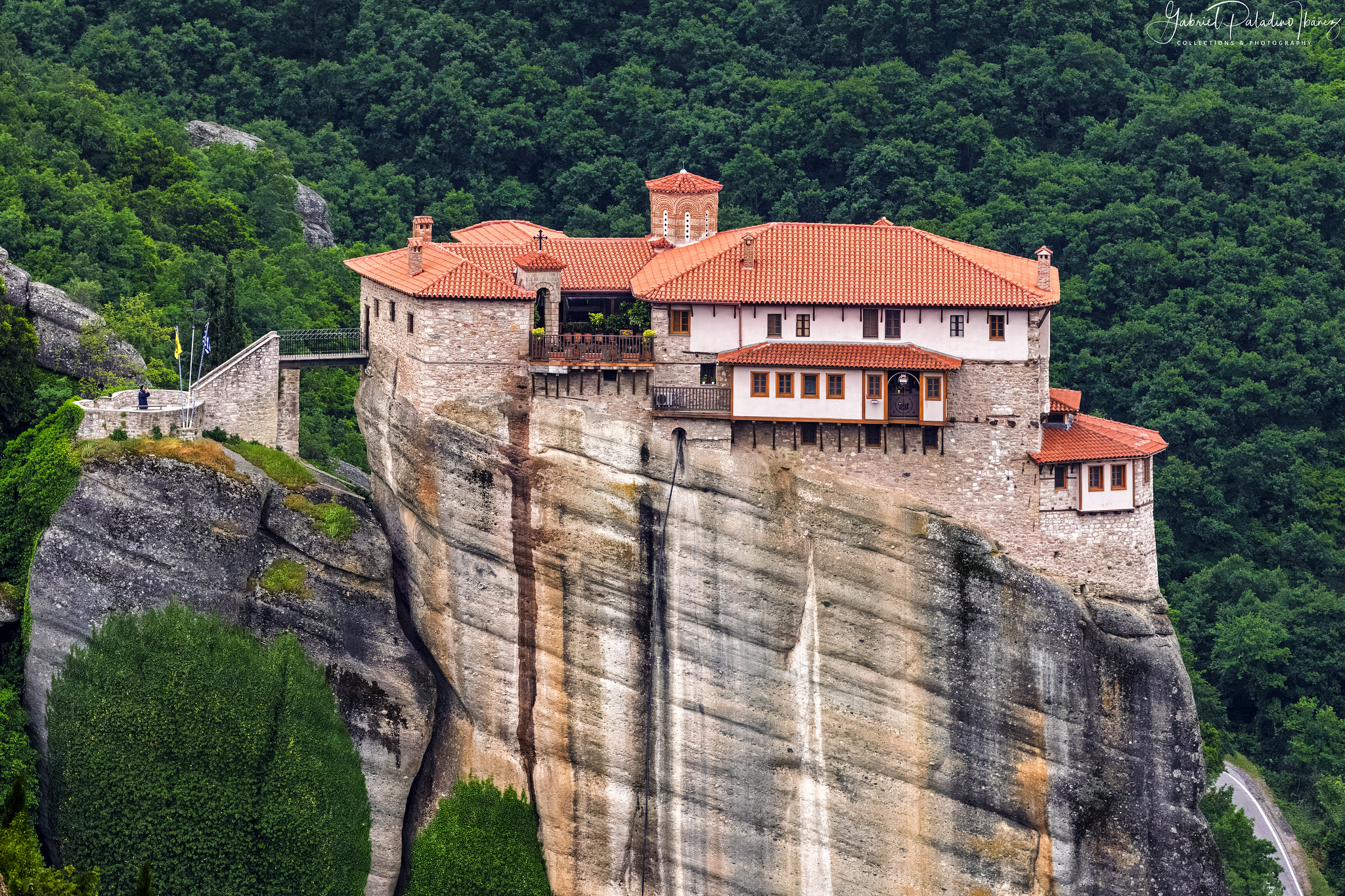
Roussanou is one of the historic monasteries of Meteora, a UNESCO World Heritage Site since 1988. Formally dedicated to Saint Barbara, it occupies a narrow sandstone pillar and is built around the limited space available on its summit.
The site was developed in the sixteenth century by the hieromonks Maximos and Ioasaph of Ioannina, who established themselves there in the late 1520s and rebuilt an earlier church on the rock. A testament dating from 1545 records their work and the development of the monastery. The origin of the name Roussanou remains uncertain; one tradition connects it with an earlier hermit who is said to have inhabited the rock.
Because of the restricted space, the monastery was arranged vertically across three levels, incorporating the Katholikon, monastic cells, reception areas, and other auxiliary spaces. The Katholikon is dedicated to the Transfiguration of Christ. Its interior was decorated with frescoes in 1560, during the abbacy of the hieromonk Arsenios. The paintings show strong stylistic affinities with the Cretan School and are an important example of sixteenth-century post-Byzantine religious art.
Roussanou declined in the following centuries and, by 1614, had become associated with the neighboring Varlaam Monastery. It suffered further deterioration over the centuries and was looted during the German occupation of Greece in World War II. Restoration and conservation were later carried out under the supervision of the regional archaeological authorities.
Since 1988, Roussanou has functioned as a convent and has been home to a small community of Orthodox nuns.
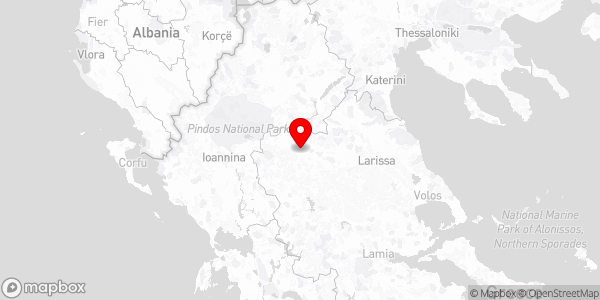
Meteora, Thessaly, Greece
Camera: Canon EOS R7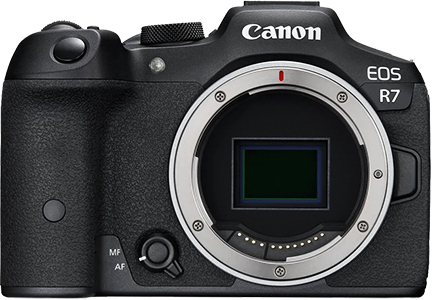
Lens: Sigma 150-600mm F5-6.3 DG OS HSM | Contemporary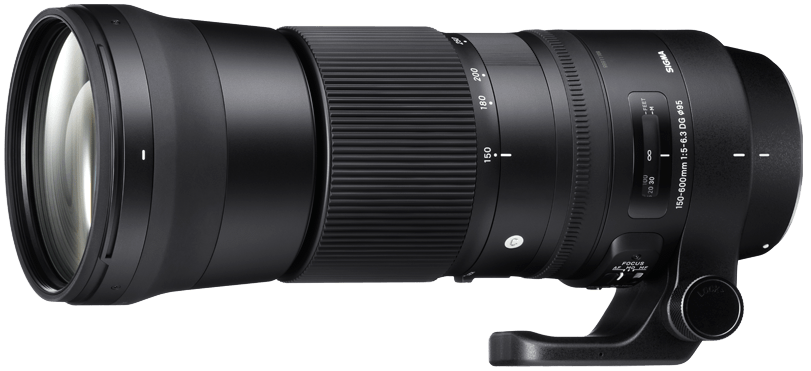
Capture Information:
Focal Length: 211.0 mm
Shutter Speed: 1/1250
Aperture: f/5.6
ISO: 2500
Photo Taken: May 08, 2026
High resolution
Flickr Gallery