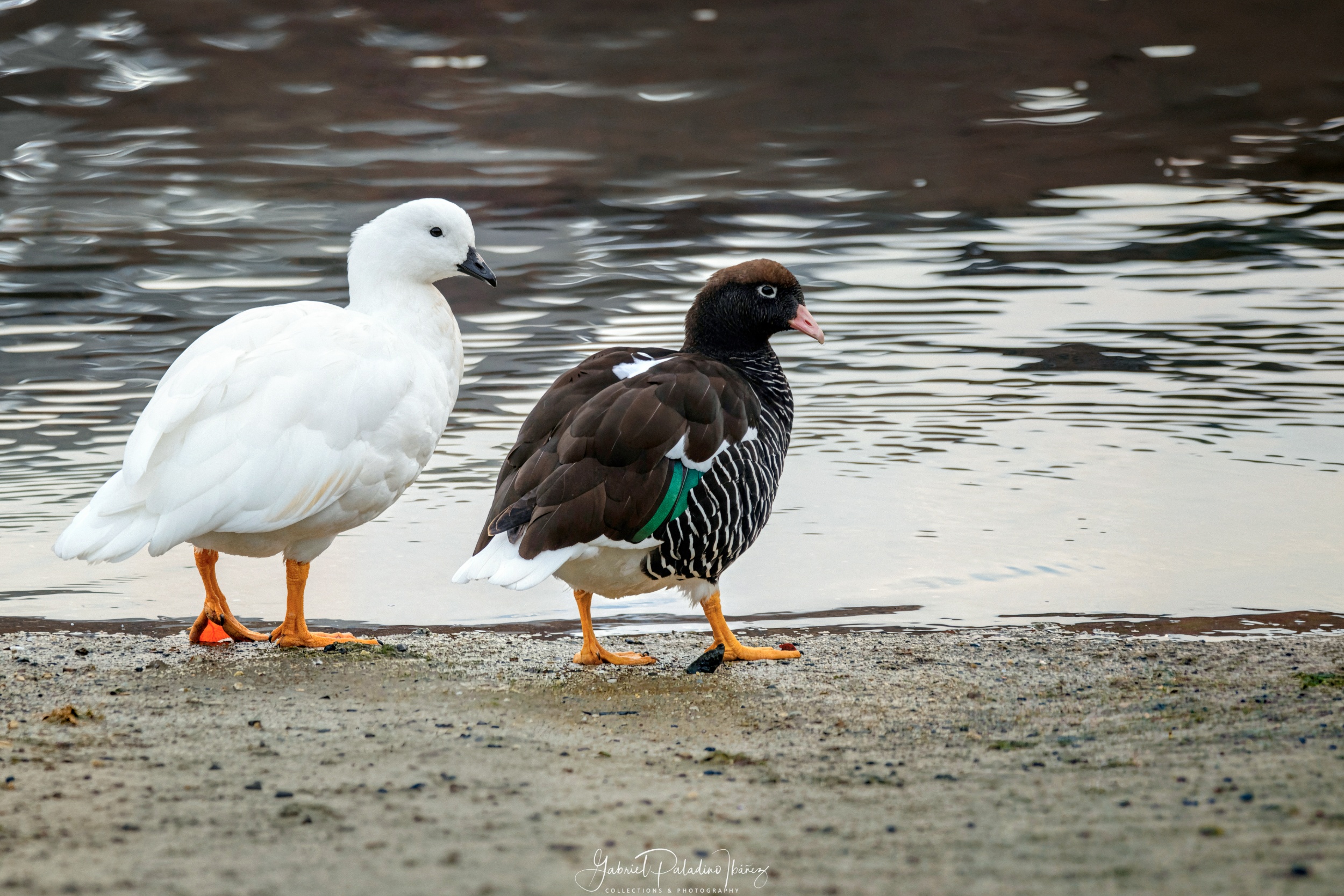
On the rocky shores of Ushuaia, where the Beagle Channel meets the southern tip of South America, the kelp goose (Chloephaga hybrida) can be observed in its characteristic coastal habitat. This species, belonging to the family Anatidae, is notable for its marked sexual dimorphism. The male is entirely white, with yellow legs and a robust build, while the female shows a darker head and neck, with finely barred plumage across the breast. Seen together, they form a pair that remains closely bonded, moving calmly along the shoreline in search of marine algae, particularly Ulva, which constitutes the core of their diet.
The kelp goose is largely sedentary, with populations distributed across southern Chile and Argentina, and a distinct subspecies inhabiting the Falkland Islands. Unlike other geese, it rarely ventures inland, maintaining a strong association with marine environments. Its behavior is quiet and deliberate, reflecting an adaptation to the austere conditions of the southern latitudes.
Observing male and female side by side in Ushuaia provides not only a clear view of their contrasting plumage but also an insight into their ecological role. The kelp goose exemplifies the resilience of birdlife in the southern cone, thriving in balance with the tides, the wind, and the cold waters that define its environment.
• Kelp goose
• Caranca, Cauquén caranca, Cauquén marino
Scientific classification:
Kingdom:Animalia
Phylum:Chordata
Class:Aves
Order:Anseriformes
Family:Anatidae
Genus:Chloephaga
Species:C. hybrida
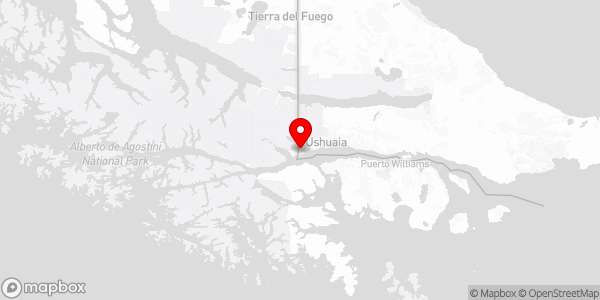
Bahía Lapataia, Ushuaia, Tierra del Fuego, Argentina
Camera: Canon EOS 750D / Rebel T6i / Kiss X8i
Lens: Sigma 150-600mm F5-6.3 DG OS HSM | Contemporary
Capture Information:
Focal Length: 374.0 mm
Shutter Speed: 1/500
Aperture: f/6.3
ISO: 1000
Photo Taken: April 21, 2022
High resolution
Flickr Gallery