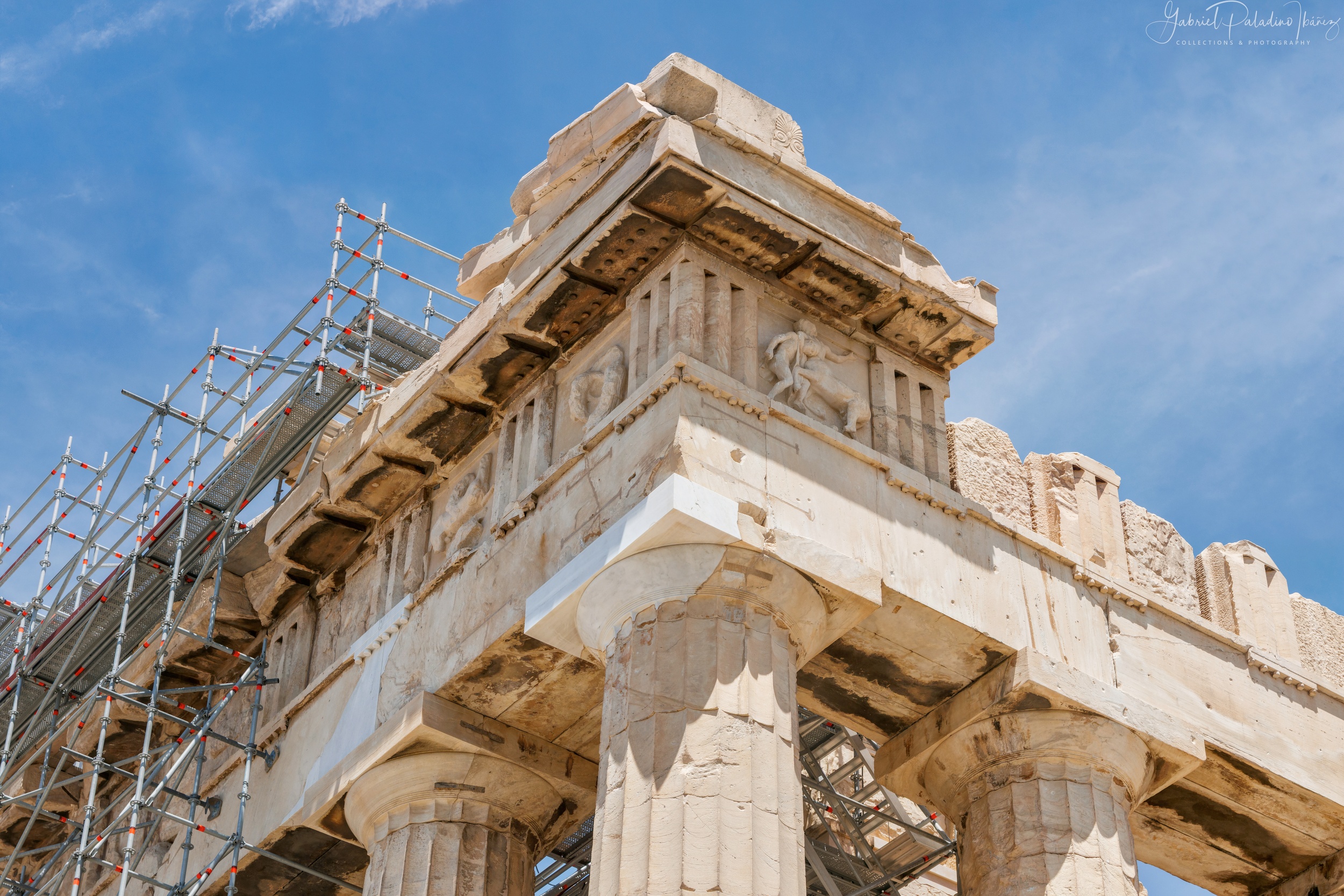
A close view of one corner of the Parthenon, where the entablature (the horizontal band of stone resting on the columns) turns and the weight of the roof above is carried down through a single Doric capital. The frieze of triglyphs (the grooved stone blocks) and metopes (the carved rectangular panels set between them) runs along the top, each metope originally carved with a mythological scene. The relief visible here corresponds to South Metope 1, attributed to the workshop of Pheidias and carved from Pentelic marble around 445 to 440 BC. It shows a Centaur, a mythical creature half man and half horse, gripping a Lapith (a member of a legendary Thessalian people) by the neck, a tree branch raised to strike, while the Lapith, still struggling to break free, drives his spear into the Centaur’s belly, the outcome of the fight left deliberately unresolved. It belongs to the Centauromachy, the mythological battle between Lapiths and Centaurs that filled all thirty two metopes on the temple’s south side, after the Centaurs, drunk at the wedding feast of King Peirithoos, tried to abduct the Lapith women.
Most of the south metopes were forcibly removed by Lord Elgin in the early nineteenth century and are now in the British Museum, with others scattered between the Louvre and museums abroad. Metope 1 is one of the few that remained in Athens and is preserved today in the Acropolis Museum, together with Metope 12. What stands on the building itself in this section is a cast, part of the effort to protect the surviving originals from further weathering.
What stands out most from this angle is the contrast in the stone itself. Sections darkened by more than two thousand years of weathering sit directly beside lighter blocks of new Pentelic marble, quarried and carved to match the original profiles and inserted during the ongoing restoration. The join between old and new is left visible rather than concealed, a deliberate choice that lets the building’s history remain legible rather than erased. The scaffolding to the left is part of the same process, present in nearly every photograph taken of the Parthenon today, and likely to remain so for years to come.

Camera: Canon EOS R7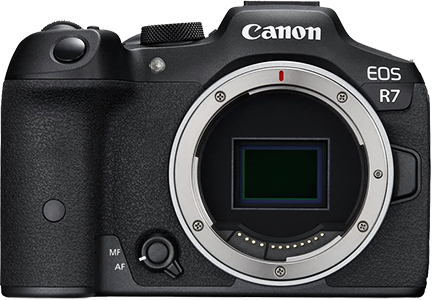
Lens: TAMRON SP 28-75mm F/2.8 Di A09E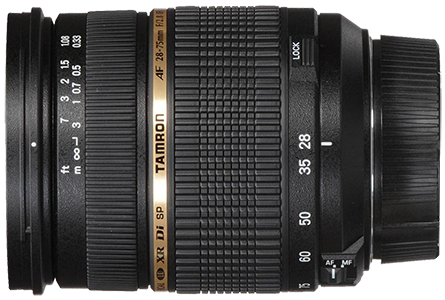
Capture Information:
Focal Length: 42.0 mm
Shutter Speed: 1/640
Aperture: f/8.0
ISO: 160
Photo Taken: May 19, 2026
High resolution
Flickr Gallery