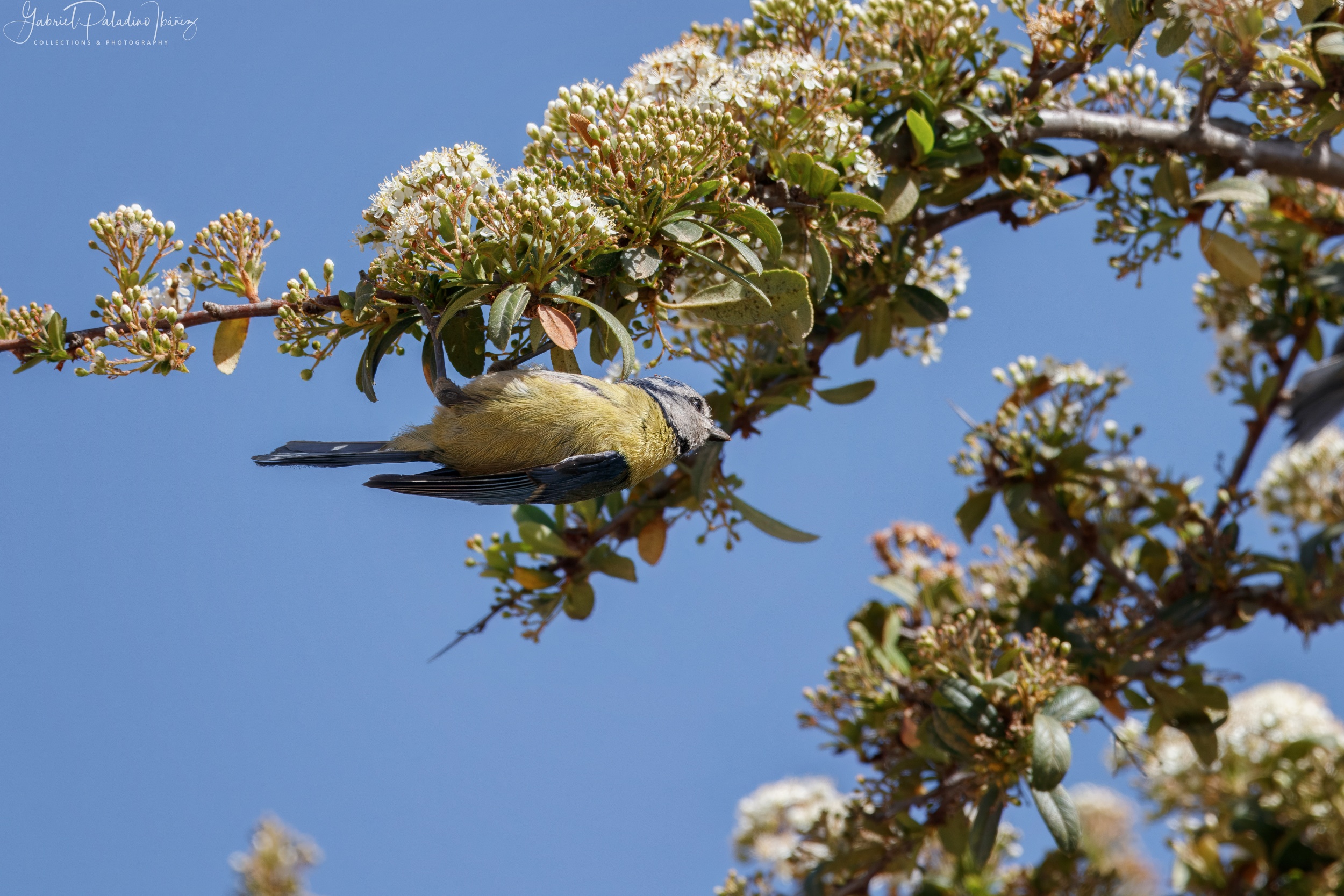
A vibrant combination of azure blue, yellow, white, and green gives this small songbird a striking appearance despite its modest size. Common throughout much of Europe, it is an agile and energetic species that spends much of its time searching for insects among foliage, often clinging to branches in seemingly impossible positions.
Its white face, crossed by a dark eye-stripe and framed by a blue crown, makes it instantly recognizable. Outside the breeding season, individuals frequently join mixed-species flocks, moving through woodlands, gardens, and olive groves while maintaining constant vocal contact with one another.
Curious and adaptable, the Eurasian blue tit readily occupies natural tree cavities as well as nest boxes, thriving in both rural and human-modified environments. Its lively behavior and bright coloration make it one of the most beloved and familiar birds across its range.
• Γαλαζοπαπαδίτσα (Galazopapadítsa)
• Eurasian blue tit
• Herrerillo común
Scientific classification:
Kingdom: Animalia
Phylum: Chordata
Class: Aves
Order: Passeriformes
Family: Paridae
Genus: Cyanistes
Species: Cyanistes caeruleus
Armenoi, Crete, Greece

Camera: Canon EOS 77D / 9000D
Lens: Sigma 150-600mm F5-6.3 DG OS HSM | Contemporary
Capture Information:
Focal Length: 374.0 mm
Shutter Speed: 1/500
Aperture: f/8.0
ISO: 400
Photo Taken: May 12, 2026
High resolution
Flickr Gallery