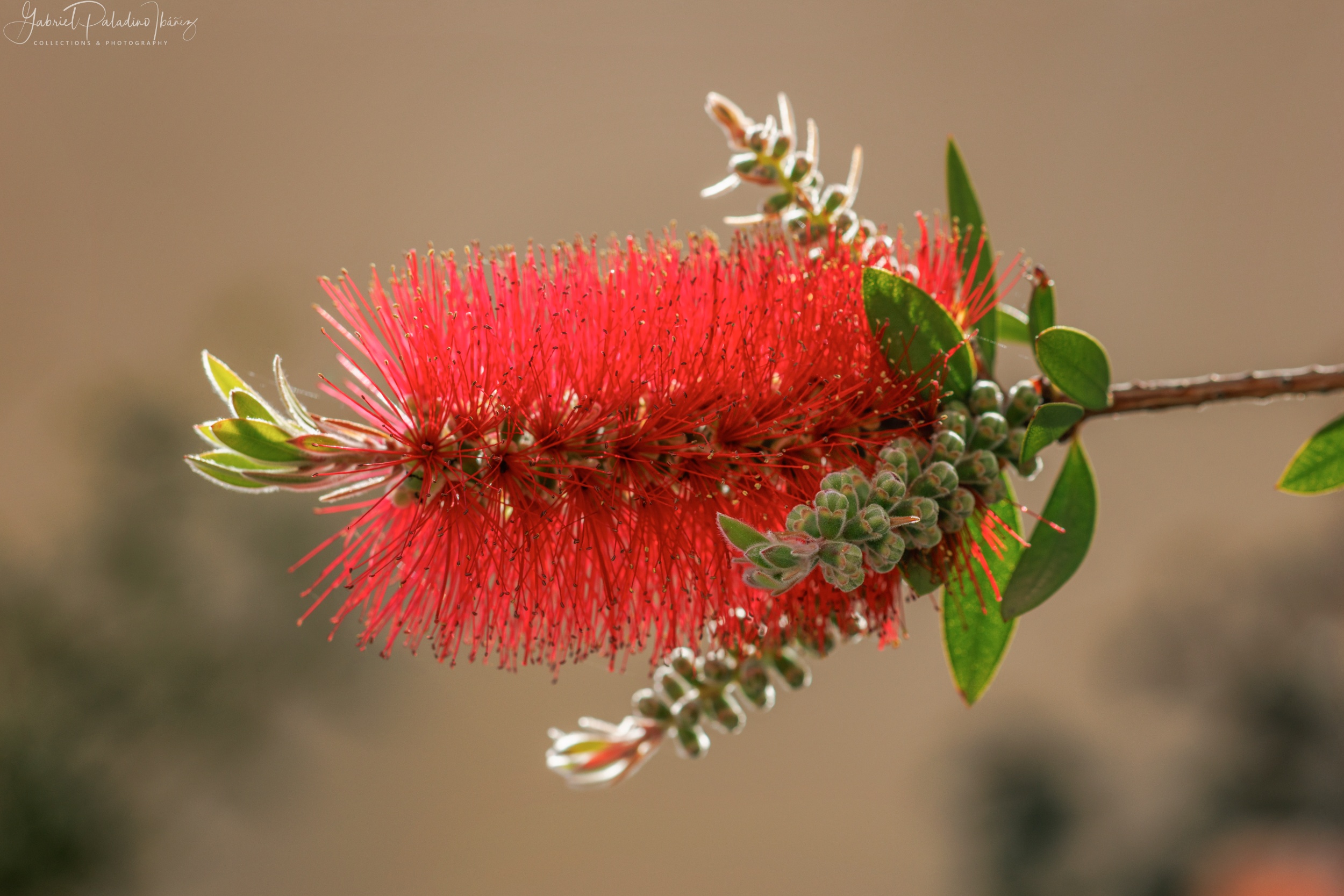
Bottlebrushes are members of the genus Melaleuca and belong to the family Myrtaceae. They are closely related to paperbark melaleucas, which also have ‘bottlebrush’ shaped flower spikes. Most Bottlebrushes occur in the east and south-east of Australia. Two species occur in the south-west of Western Australia and four species in New Caledonia. Bottlebrushes can be found growing from Australia’s tropical north to the temperate south. They often grow in damp or wet conditions such as along creek beds or in areas which are prone to floods.
This species is probably the best known bottlebrush and is widely cultivated. The bright red flower-spikes appear in summer and autumn. Crimson Bottlebrush grows well in wet conditions and usually reaches 4 m. Plants should be lightly pruned and fertilised after flowering. Neglected or mis-shapen plants respond to hard pruning.
• Καλλιστήμονας (Kallistímonas)
• Red bottlebrush, crimson bottlebrush, lemon bottlebrush
• Árbol del cepillo, escobillón rojo, limpiatubos
Scientific classification:
Kingdom:Plantae
Clade:Tracheophytes
Clade:Angiosperms
Clade:Eudicots
Clade:Rosids
Order:Myrtales
Family:Myrtaceae
Genus:Melaleuca
Species:M. citrina
Synonyms: Metrosideros citrina, Callistemon lanceolatus, Callistemon citrinus
Note: This species was previously classified under the genus Callistemon (as Callistemon citrinus), but is now placed in the genus Melaleuca, as Melaleuca citrina. Both names remain in common use, particularly in horticultural and commercial texts.
Armenoi, Crete, Greece

Camera: Canon EOS R7
Lens: Canon EF 100mm f/2.8L Macro IS USM
Capture Information:
Focal Length: 100.0 mm
Shutter Speed: 1/500
Aperture: f/5.0
ISO: 100
Photo Taken: May 12, 2026
High resolution
Flickr Gallery