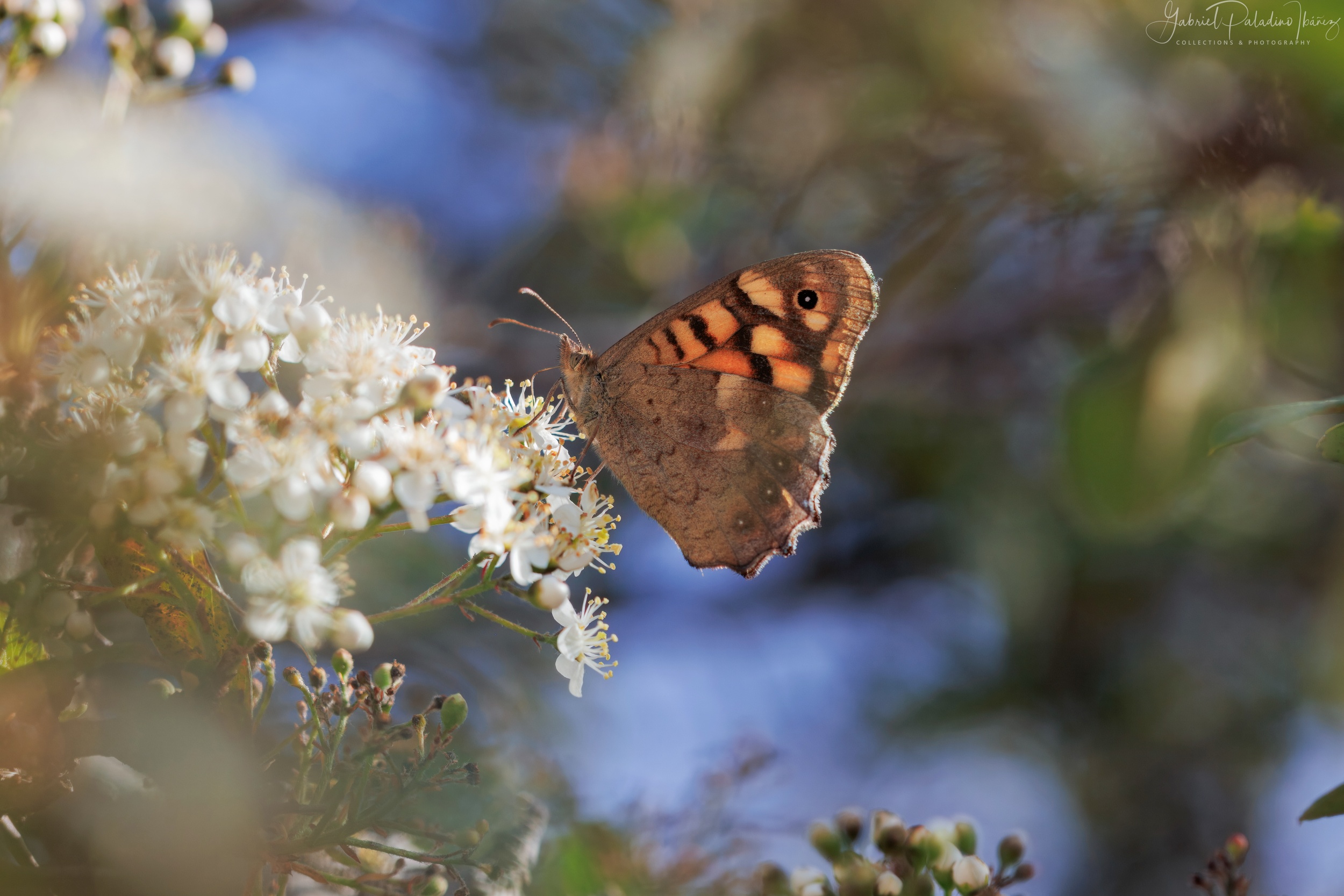
Pararge aegeria, commonly known as the Speckled Wood, is a butterfly of the family Nymphalidae broadly distributed across Europe, North Africa, and parts of western Asia.
On Crete it favours shaded environments — dense shrubland, wooded valleys, forest glades, and overgrown lanes — and is notably active even on overcast days when most other species remain inactive. At night and during cold or wet weather, individuals roost in bushes.
The species produces multiple overlapping generations per year, with adults on the wing from spring through late autumn. Cretan individuals display the warm orange tones more consistent with P. a. aegeria, the southern European form, though formal subspecific assignment requires closer examination.
Wings show a dark brown base marked with orange to pale yellow patches and a series of white-centred eyespots along the margins. Males and females are similar in appearance, though females tend to be slightly larger and more vividly patterned.
Larvae feed exclusively on grasses (family Poaceae), with recorded host plants including False Brome (Brachypodium sylvaticum), Cock’s-foot (Dactylis glomerata), and species of Poa. The caterpillars are bright green with faint yellow and white stripes, relying on camouflage rather than sequestered toxins for protection.
Unusually, the species can overwinter in two separate developmental stages — either as a half-grown larva or as a chrysalis — resulting in a staggered adult emergence across the season.
• Speckled Wood
• Mariposa del bosque jaspeado
Scientific classification:
Kingdom: Animalia
Phylum: Arthropoda
Class: Insecta
Order: Lepidoptera
Family: Nymphalidae
Genus: Pararge
Species: P. aegeria
Synonym: Papilio aegeria
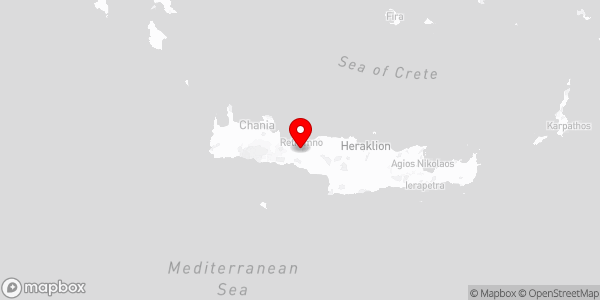
Armenoi, Crete, Greece
Camera: Canon EOS R7
Lens: Canon EF 100mm f/2.8L Macro IS USM
Capture Information:
Focal Length: 100.0 mm
Shutter Speed: 1/400
Aperture: f/4.0
ISO: 100
Photo Taken: May 12, 2026
High resolution
Flickr Gallery