
Standing guard at Syntagma Square, in front of the Hellenic Parliament, the Evzones are among the most visually arresting figures in modern Greece — and among the most misread. What many visitors register as elaborate pageantry is, in fact, one of the most symbolically layered institutions in the country: a living monument in which every stitch, every gesture, and every deliberate step carries meaning accumulated over two centuries of national history.
The word Evzone (Εύζωνας) derives from the ancient Greek eúzōnos — meaning "well-girt" or "lightly equipped" — a term used in classical Greek literature to describe agile, light-armed warriors. The modern unit traces its institutional roots to December 12, 1868, when a royal decree formally established four battalions to guard the Greco-Ottoman frontier. But their deeper origins lie with the klephts and armatoloi — the mountain guerrillas who fought against Ottoman rule during the Greek War of Independence beginning in 1821. These irregular fighters, agile, fiercely independent, and recognizable by their distinctive dress, became the founding myth of Greek military identity. Their uniform was eventually formalized, adopted as official national dress after independence, and survives today in the last remaining Evzone unit of the Hellenic Army. Before assuming their exclusively ceremonial role after the Second World War, Evzone units served as active combat formations through the Balkan Wars, the First World War, and the Asia Minor campaign — conflicts whose weight is part of what gives the guard its particular gravity.
Selection is rigorous and voluntary. All Evzones are volunteers drawn from the Infantry, Artillery, and Armoured Corps of the regular army, identified during basic training and required to complete at least six months of active military service before beginning Evzone training. The minimum height is 1.87 meters — candidates are also expected to be able to raise their legs to shoulder height, fully extended, during the march. Training lasts approximately one month and concentrates on physical conditioning, mental endurance, ceremonial precision, and the ability to stand completely motionless. The attrition rate is widely reported to be significant.
Their primary post is the Tomb of the Unknown Soldier — a cenotaph honoring all unidentified Greek soldiers fallen in every conflict of the modern era. Two Evzones stand guard around the clock, every hour of every day of the year. Every Sunday at 11am, an entire platoon marches from the barracks behind Parliament down Vasilissis Sofias Avenue, accompanied by a military band, for the Grand Changing of the Guard — the most elaborate version of the ceremony, drawing large crowds. They also raise and lower the Greek flag at the Acropolis every Sunday, accompany the President on official visits abroad, and represent Greece in state ceremonies worldwide.
The uniform is a work of sustained craft. Each piece is entirely handmade by a small tailoring workshop within the Presidential Guard compound, and the full ensemble can take more than eighty days to assemble. The foustanella — the white pleated kilt that defines the silhouette — is made from thirty meters of white fabric and carries four hundred pleats, each one officially associated with a year of Ottoman rule over Greece (1453–1821). Historians note that the garment itself predates Greek independence and was common across the Balkans; the numerical symbolism appears to have been assigned after independence, most famously associated with revolutionary leader Theodoros Kolokotronis, who wore a kilt with nearly four hundred pleats. The attribution may be part retrospective, part national construction — but it is now inseparable from the uniform’s meaning. The white of the foustanella and the undershirt is understood to represent the purity of the independence struggle. The krossia, the braided fringes across the chest, are blue and white — the colors of the Greek flag.
The pharion, the red cap with its long black tassel, concentrates two layers of mourning: the red stands for the blood of the fallen, the black tassel for the grief of those left behind. The fermeli, the embroidered vest, is the most labor-intensive piece in the ensemble — hand-stitched in gold and white thread with patterns drawn from Orthodox iconography and folk tradition, and estimated to take over a month to complete. Beneath the foustanella: a white cotton undershirt, two layers of white woolen stockings on each leg, and black silk garters at the knee.
The tsarouchia — the heavy red leather shoes with their conspicuous black pompom — are perhaps the element that most surprises first-time observers. Each pair weighs approximately three kilograms and has between sixty and one hundred twenty nails hammered into the sole, a feature originally designed to provide traction on rocky mountain terrain and which produces the sharp, resonant sound heard with every step. The pompom on the pointed toe has been explained variously as insulation, decoration, and — in popular tradition — a hiding place for a small blade in close combat. The blade theory has no firm historical documentation, but it persists as part of the folklore surrounding the unit.
Every element of the ceremonial movement is deliberate. The guards stand motionless for an entire hour — an exercise in physical discipline that most people could not sustain for ten minutes under any conditions — and then perform their relief in pronounced slow motion. The pace is practical: it allows circulation to resume gradually after prolonged stillness. The sharp, heavy stamp of the tsarouchia against the stone pavement, audible across the square, carries a tradition that is widely shared among Greeks and members of the Guard themselves: it is a signal to the dead — to all the unnamed soldiers commemorated below — that Greece endures. Some guides and popular accounts describe the full choreography as tracing the Greek word Όχι ("No") — the same word spoken by Prime Minister Metaxas to Mussolini’s ultimatum in 1940 — through the positions of arms, legs, and rifle. This reading is patriotically resonant and deeply embedded in Greek popular culture, though it represents an interpretation of the movements rather than their documented choreographic origin.
What emerged from the memory and traditions of mountain guerrillas fighting for the survival of a people has become, over two centuries, one of the most recognizable ceremonial institutions in the world: soldiers who carry the weight of an entire national memory, one deliberate step at a time.
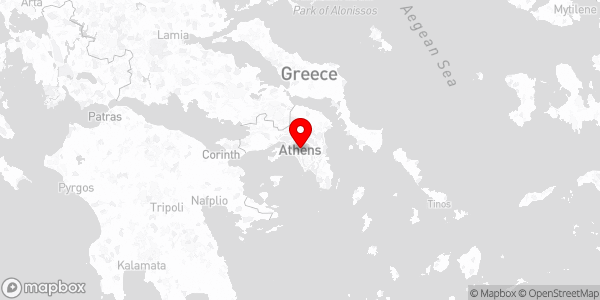
Syntagma, Athens, Greece
Camera: Canon EOS R7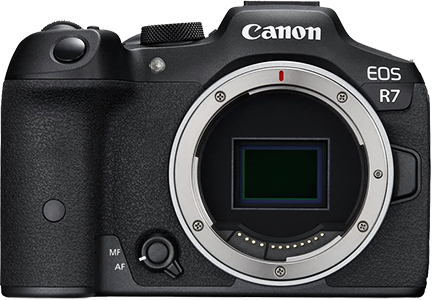
Lens: TAMRON SP 28-75mm F/2.8 Di A09E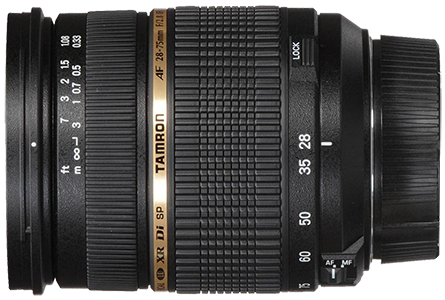
Capture Information:
Focal Length: 33.0 mm
Shutter Speed: 1/640
Aperture: f/9.0
ISO: 100
Photo Taken: May 17, 2026
High resolution
Flickr Gallery