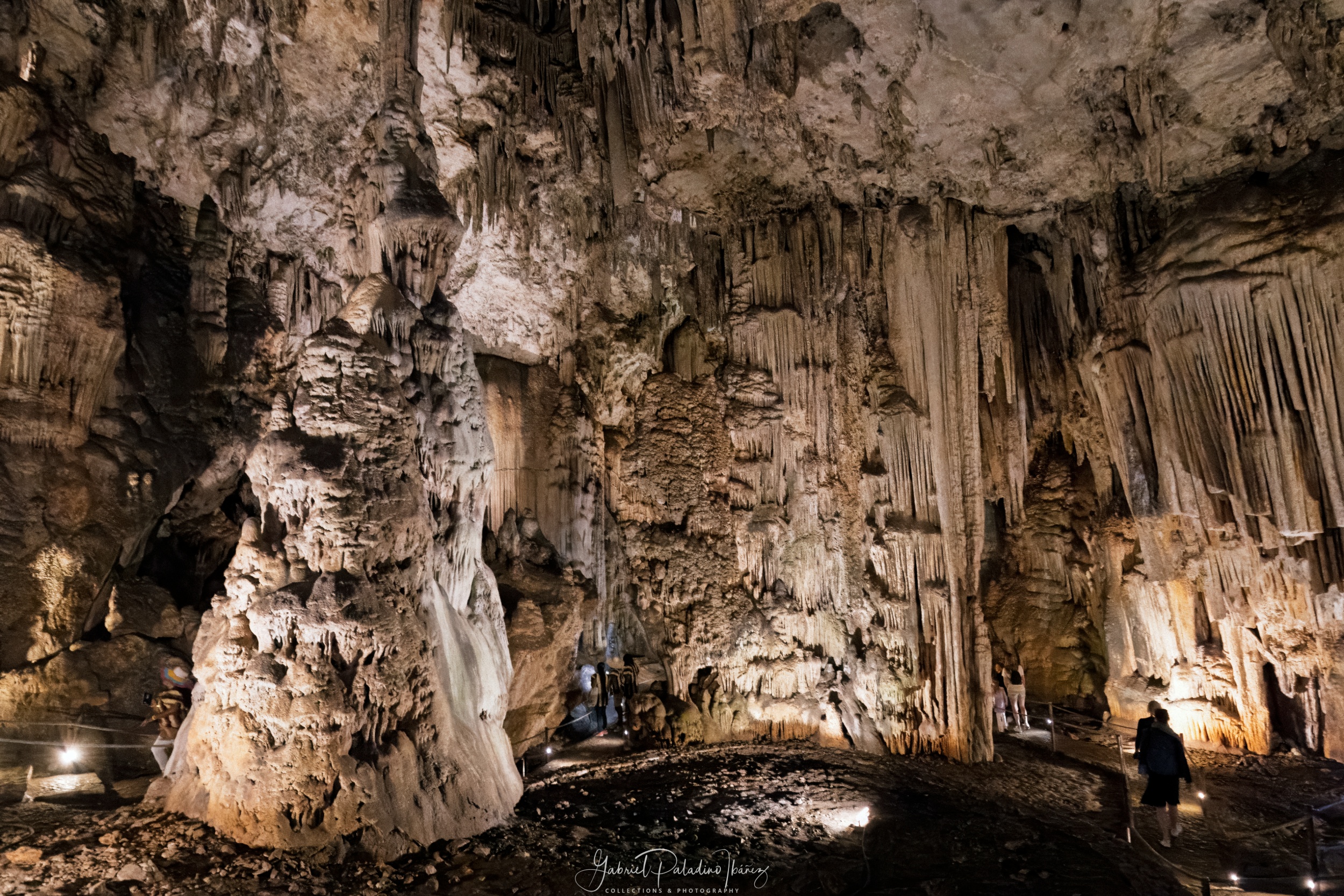
Melidoni Cave (Σπήλαιο Μελιδονίου), located near Rethymno on the island of Crete, is among the most historically significant caves in Greece. Known since antiquity, it served as a place of worship during the Minoan civilization — likely associated with Talos, the mythical bronze giant and protector of Crete — and later, during the Classical and Roman periods, as a formal sanctuary dedicated to Hermes Talaios, a local cult that merged the figures of Talos and Hermes.
The main chamber rises to considerable height, its ceiling dense with stalactites and its floor marked by large stalagmite formations built up over millennia. The presence of visitors at its base gives measure to a space that, without that reference, would be difficult to grasp.
The cave is best known for a tragic episode during the Ottoman occupation of Crete. In October 1823, around 370 villagers — women and children among them, alongside some 30 resistance fighters — took refuge here to escape Ottoman forces. After a siege of several months, the army sealed the entrance and set fires to channel smoke into the cave. Nearly all inside perished; one man, Manolis Kirmizakis, survived and returned a decade later with the English explorer Robert Pashley to discover the remains of the victims. A large stone sarcophagus within the cave holds those bones today, a reminder of the resistance and loss that shaped Cretan history.
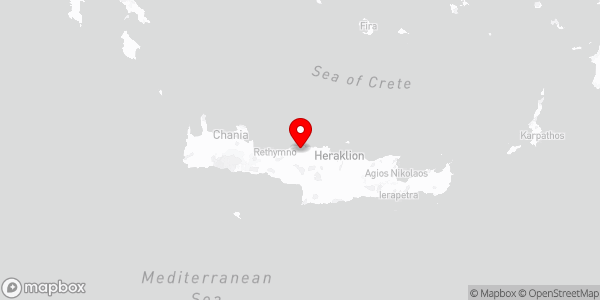
Melidoni, Crete, Greece
Camera: Canon EOS R7
Lens: Canon EF-S 10-18mm f/4.5-5.6 IS STM
Capture Information:
Focal Length: 12.0 mm
Shutter Speed: 1/13
Aperture: f/5.0
ISO: 12800
Photo Taken: May 15, 2026
High resolution
Flickr Gallery