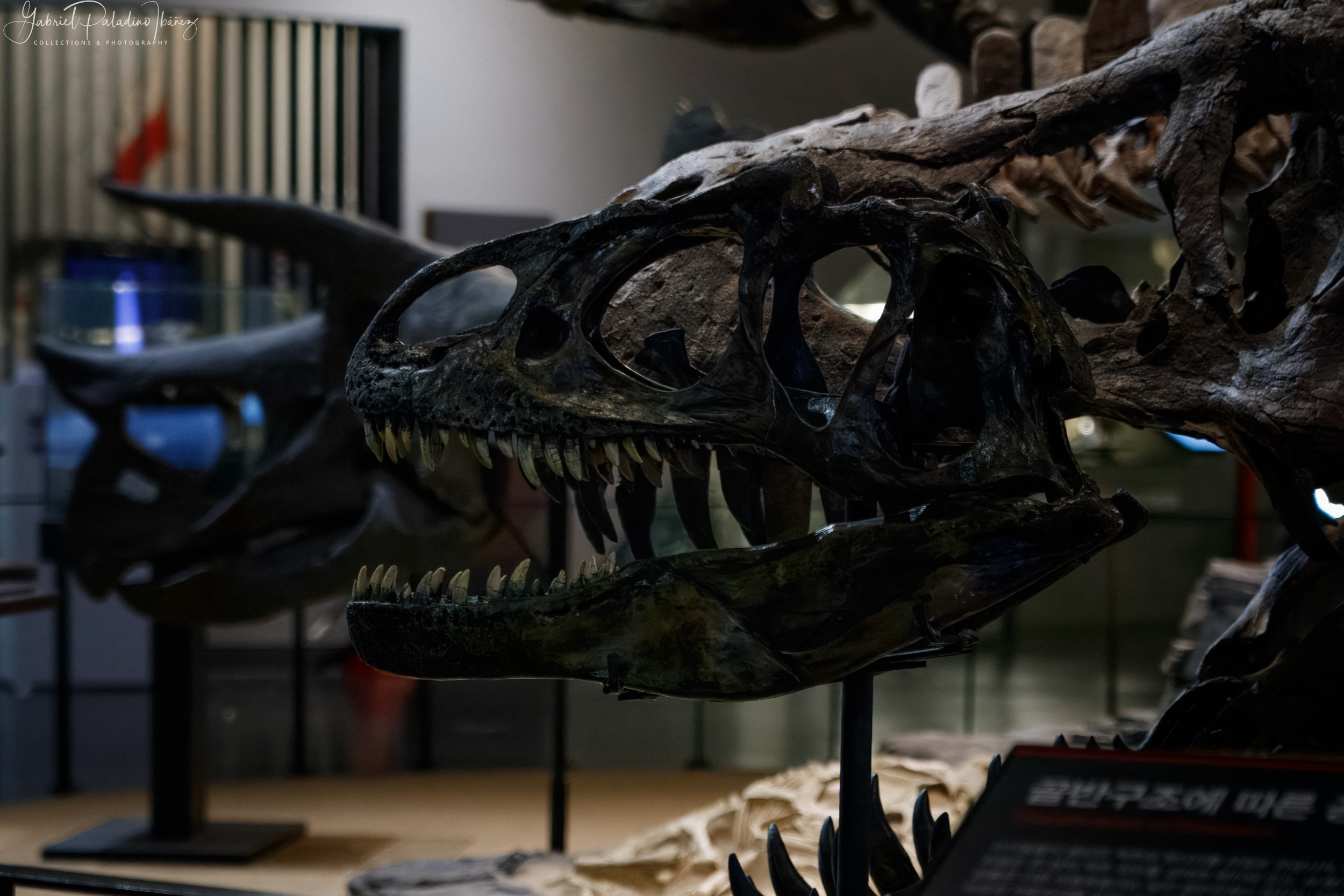
This skull replica, on display at the Gwacheon National Science Museum, belonged to one of the most effective predators of the Late Jurassic period, roughly 155 to 145 million years ago. Its fossils have been found primarily across what is now North America, with possible remains in Europe. The name — "different lizard" — was given in reference to its unusual skeletal anatomy, which set it apart from other dinosaurs known at the time.
Scientific Classification:
Kingdom: Animalia
Phylum: Chordata
Class: Reptilia
Order: Saurischia
Suborder: Theropoda
Family: Allosauridae †
Genus: Allosaurus †
The two bony ridges above the eye sockets are among its most recognizable features. Paleontologists believe these crests served a social function — species recognition or visual display — rather than any structural one. The skull itself, despite its size, was relatively lightweight, with internal openings that reduced mass while still allowing it to handle the stresses of hunting. The jaws were lined with dozens of serrated, backward-curving teeth designed to grip and hold. Some researchers have proposed that Allosaurus drove its upper jaw into prey in a downward hatchet-like motion, relying on neck muscle force rather than bite strength alone.
Most individuals measured between 8.5 and 10 meters in length, with some exceptional specimens possibly reaching 12 meters, and body weight estimates generally fall between 2 and 3 tons. As the dominant large predator of its environment, it likely targeted animals like Stegosaurus and younger sauropods, while also being an opportunistic scavenger — a behavior common among large predators both extinct and living.

Camera: Canon EOS 800D / Rebel T7i / Kiss X9i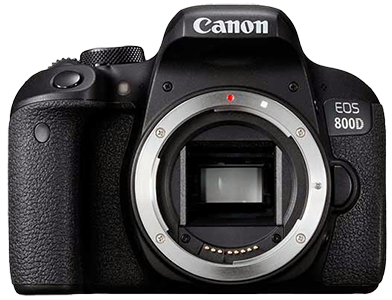
Lens: TAMRON SP 28-75mm F/2.8 Di A09E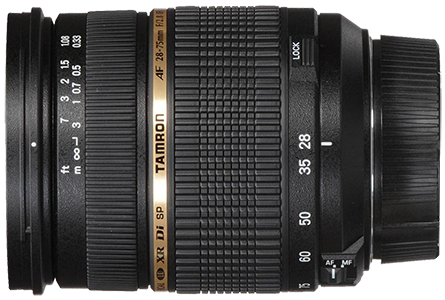
Capture Information:
Focal Length: 75.0 mm
Shutter Speed: 1/125
Aperture: f/3.5
ISO: 3200
Photo Taken: April 30, 2025
High resolution
Flickr Gallery