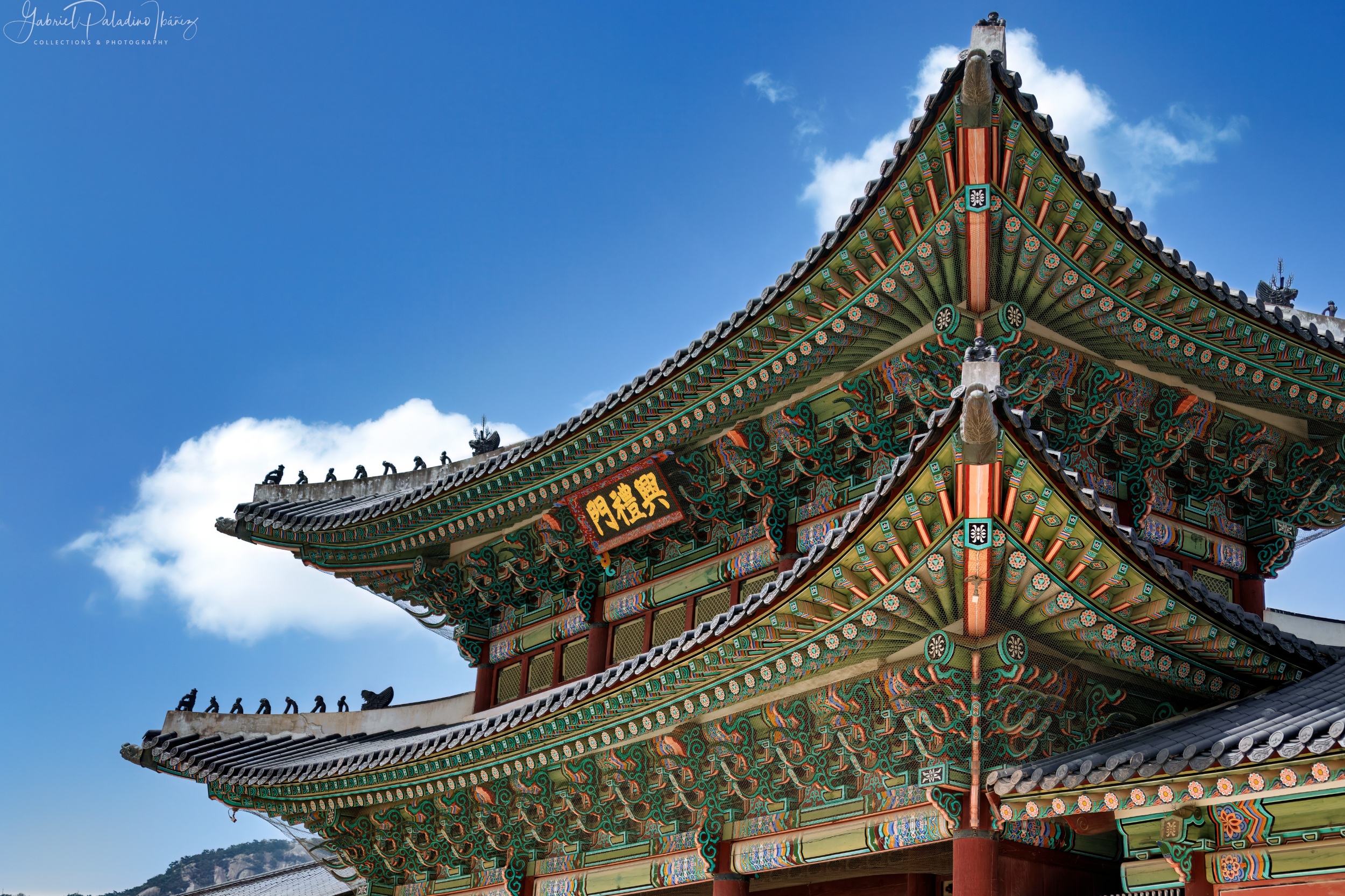
My 2025 visit to Seoul allowed me to appreciate the architectural layers and the profound cultural recovery of the royal compound. Passing the first threshold, I encountered Heungnyemun, the gateway that defines the transition into the ceremonial heart of the palace.
Originally erected in 1395, Heungnyemun Gate (흥례문, 興禮門), whose name may be translated as the “Gate of Promoting Courtesy,” serves as the middle entrance of Gyeongbokgung Palace and leads toward the main throne hall. The structure takes the form of a wooden pavilion with a double-tiered roof set upon a finely crafted stone platform. Its beams and brackets are adorned with dancheong, the traditional decorative painting system whose symbolic patterns and mineral pigments both protect and embellish the timber.
The history of the gate reflects the broader fate of the palace itself. The original structure was destroyed during the Imjin War (1592–1598), when Japanese invasions left much of the palace complex in ruins. For more than two centuries the site remained vacant. When the palace was reconstructed in the 1860s under the regency of Heungseon Daewongun, the gate was rebuilt and its name standardized as Heungnyemun. Earlier records indicate that it had once been known as Hongnyemun (弘禮門), and the later change in name may have been intended to avoid the character 弘, which overlapped with the personal name of the Qing emperor Qianlong.
Its most difficult period came during the Japanese colonial era. In 1914 the gate was dismantled as part of the colonial government’s redevelopment of the palace grounds, a transformation associated with the construction of the Japanese Government-General Building, which disrupted the traditional symbolic axis of the royal complex.
The gate seen today is the result of a modern cultural restoration initiative. Following the demolition of the colonial-era structure in the 1990s, a historically informed reconstruction project culminated in 2001, restoring Heungnyemun to its original position using traditional pine timber and granite. Today it once again stands along the palace’s central axis, where visitors often gather to witness the ceremonial changing of the royal guards.
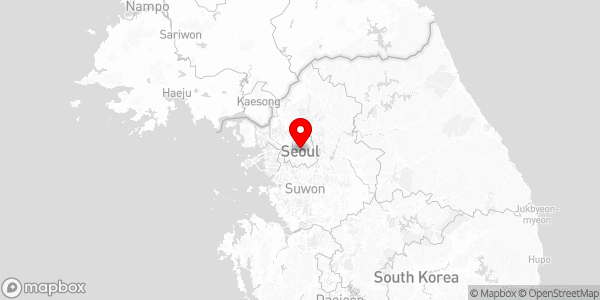
Jongno-gu, Seoul, South Korea
Historical Note:
Architecture in Seoul often conceals layers of linguistic diplomacy within its very names. Heungnyemun Gate offers a subtle example. Earlier records refer to the gate as Hongnyemun (弘禮門), but during the 19th-century reconstruction of Gyeongbokgung the first character was changed to Heung (興).
One commonly cited explanation relates to the naming taboo known in East Asia as pihwi (避諱), a cultural practice that discouraged the public use of characters found in an emperor’s personal name. Because the Qing emperor Qianlong was born Hongli (弘曆), some historians suggest the character 弘 may have been avoided in the rebuilt gate’s name.
Whether or not the change was directly motivated by this taboo, the episode illustrates how architecture, language, and diplomacy were often intertwined in the Confucian world. In royal compounds like Gyeongbokgung, even the written name of a gate could reflect the delicate balance between cultural tradition and regional political order.
Camera: Canon EOS 800D / Rebel T7i / Kiss X9i
Lens: TAMRON SP 28-75mm F/2.8 Di A09E
Capture Information:
Focal Length: 28.0 mm
Shutter Speed: 1/1000
Aperture: f/2.8
ISO: 100
Photo Taken: May 06, 2025
High resolution
Flickr Gallery