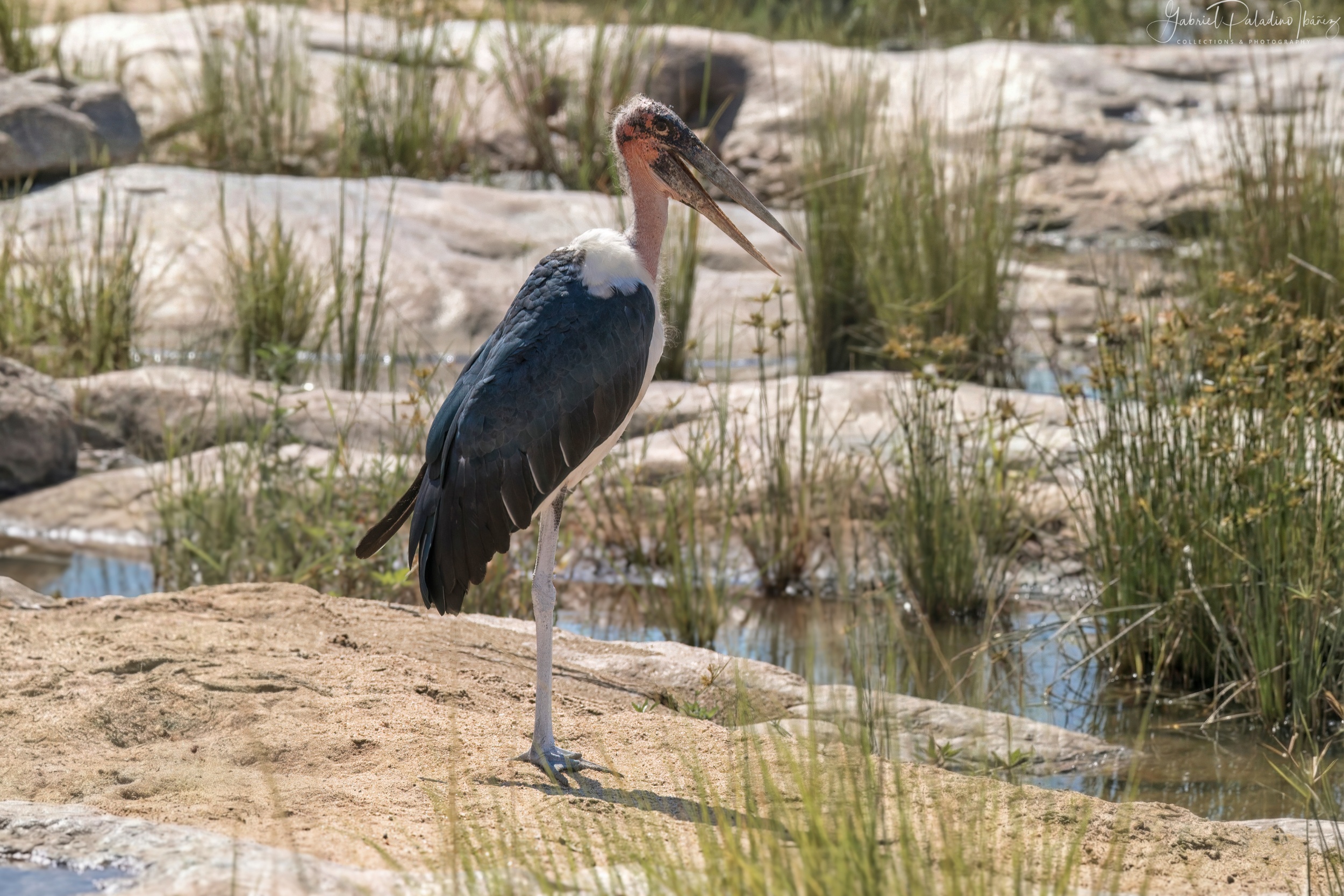
• Marabou stork / Undertaker bird
• Marabú africano
The Marabou stork, known in Spanish as marabú africano and often nicknamed the “undertaker bird,” is a massive bird belonging to the family Ciconiidae. It is widely distributed across sub-Saharan Africa and is a common sight in savannas, wetlands, and riverbanks. In South Africa, it is known by various local names, including maraboe (Afrikaans), isigola (Zulu), unocingwenya (Xhosa), musinga (Tsonga), and ingululu (Ndebele).
Standing over 1.5 meters tall with a wingspan that can exceed 3 meters, it is one of the largest storks in the world. The species is easily recognized by its bare head and neck—an evolutionary adaptation that helps keep feathers clean while feeding—its massive bill, and its distinctive hanging throat pouch.
Primarily a scavenger, the Marabou stork possesses a powerful digestive system that allows it to safely consume decaying meat and organic waste. It is frequently seen soaring on thermal currents or gathering around carcasses alongside vultures, following predators to consume leftovers. However, it is also an opportunistic hunter, often capturing fish, insects, and small reptiles. By consuming decaying matter, the Marabou plays a vital ecological role as a natural cleaner, maintaining the health of African ecosystems such as the Kruger National Park.
Scientific classification:
Kingdom:Animalia
Phylum:Chordata
Class:Aves
Order:Ciconiiforme
Family:Ciconiidae
Genus:Leptoptilos
Species:Leptoptilos crumenifer
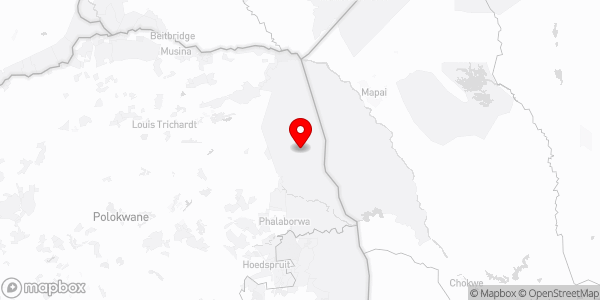
Kruger National Park, Mpumalanga, South Africa
Camera: Canon EOS 77D / 9000D
Lens: Sigma 150-600mm F5-6.3 DG OS HSM | Contemporary
Capture Information:
Focal Length: 313.0 mm
Shutter Speed: 1/800
Aperture: f/7.1
ISO: 100
Photo Taken: March 14, 2018
High resolution
Flickr Gallery