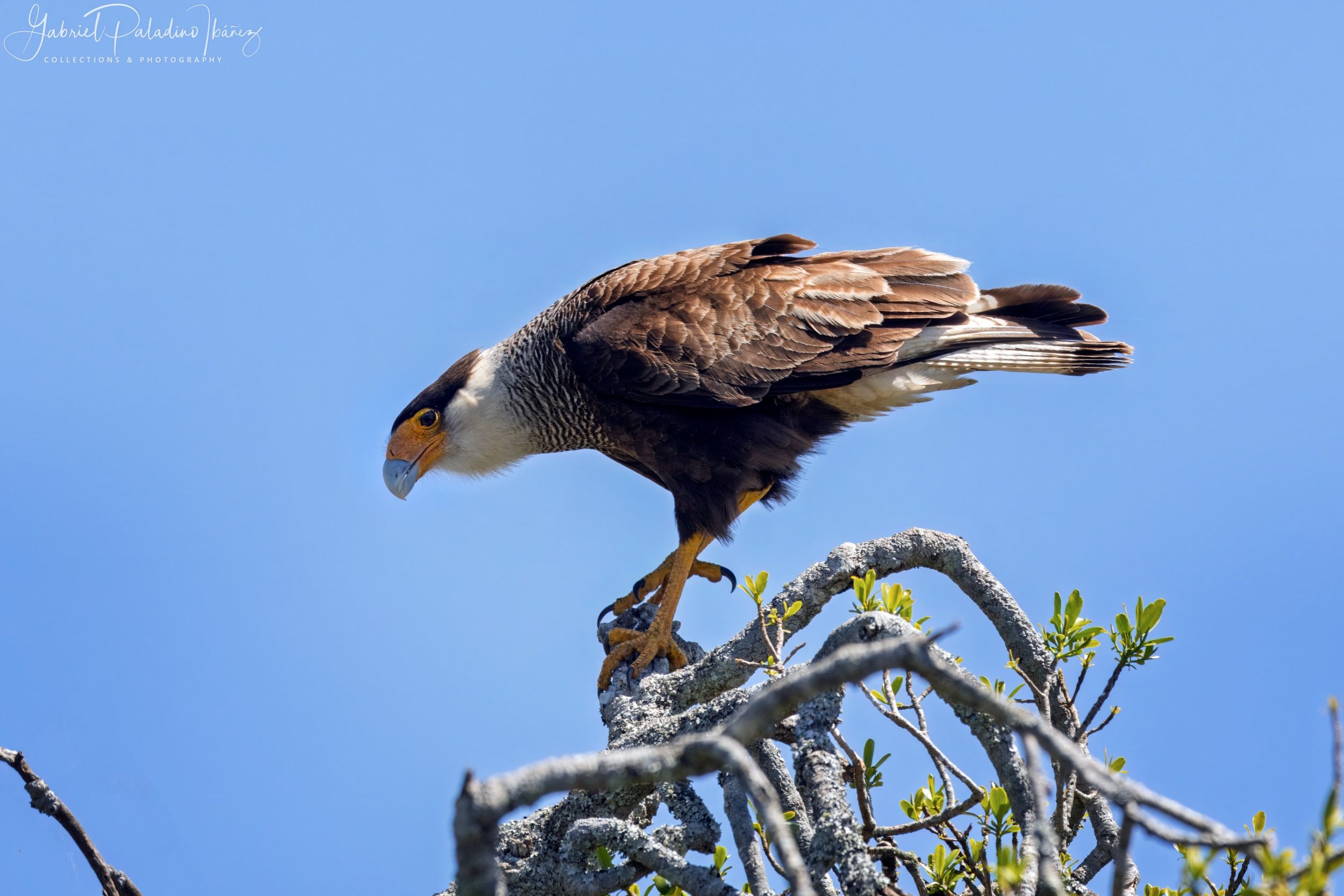
The Crested Caracara (Caracara plancus) shows distinctive coloration in its facial skin and cere, which varies with age and can change rapidly according to physiological state. Juveniles typically display pale tones such as pink, greyish, or dull pinkish-purple, while adults show stronger yellows to oranges, reaching reddish-orange during periods of high arousal. At rest, adults usually exhibit yellow or yellowish-orange tones.
These colors result from the interaction of carotenoid pigmentation and changes in blood flow. Adults possess more pigmented bare skin, and increased circulation intensifies the color, producing darker orange or reddish hues. Reduced blood flow, associated with submission or certain types of stress, causes the skin to pale and reveal mostly the yellow carotenoids.
In essence, the coloration of the cere and facial skin reflects both the bird’s age and its immediate physiological state, functioning as a rapid visual signal of arousal, alertness, dominance, or submission.
• Carancho
• Southern crested caracara
Scientific classification:
Kingdom:Animalia
Phylum:Chordata
Class:Aves
Order:Falconiformes
Family:Falconidae
Subfamily:Polyborinae
Genus:Caracara
Species:C. plancus
Laguna Garzón area, Maldonado–Rocha border, Uruguay
Camera: Canon EOS R7
Lens: Sigma 150-600mm F5-6.3 DG OS HSM | Contemporary
Capture Information:
Focal Length: 283.0 mm
Shutter Speed: 1/640
Aperture: f/8.0
ISO: 160
Photo Taken: October 18, 2025
High resolution
Flickr Gallery
Did you like this post?