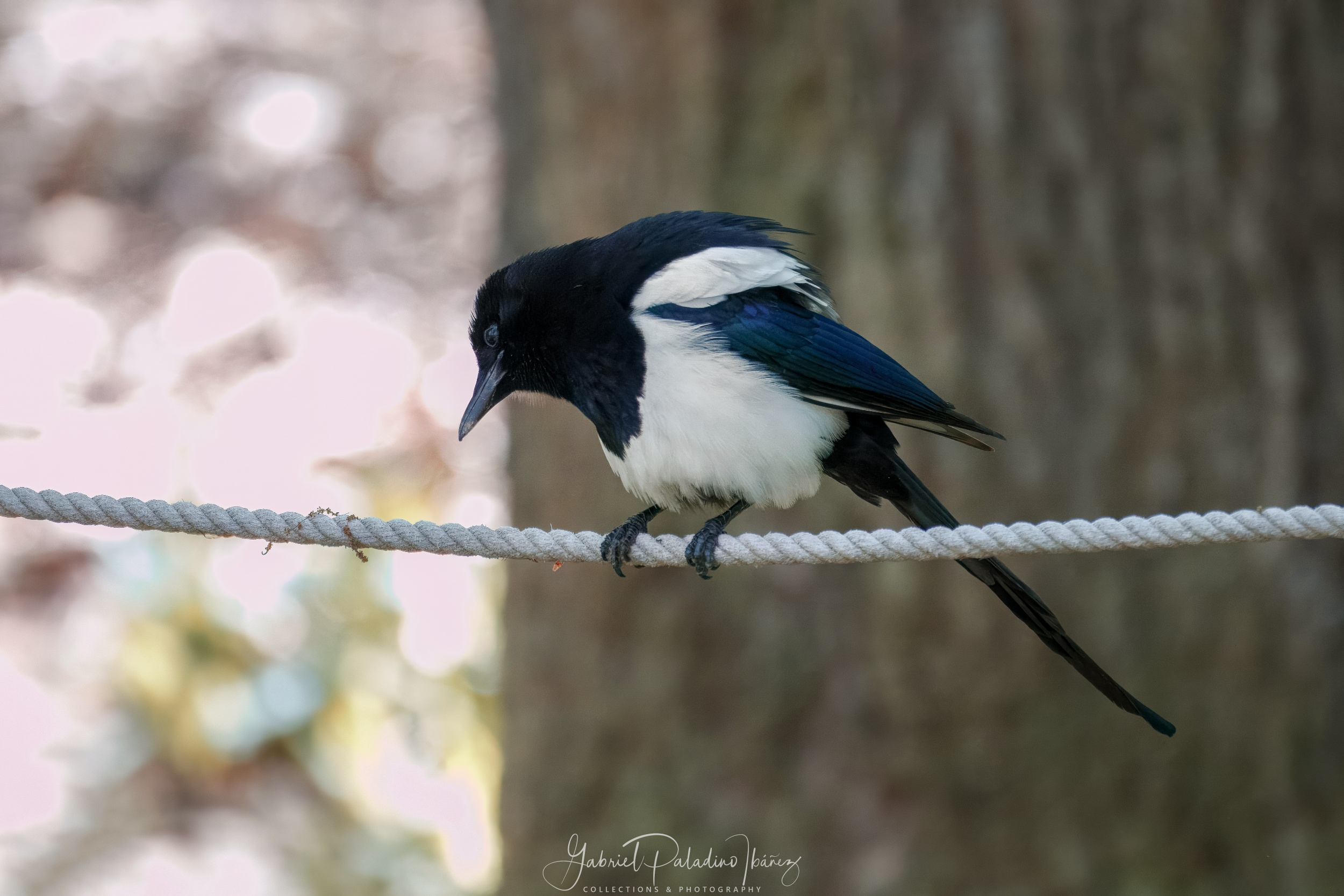
In Korea, the Oriental magpie — known as 까치 (Kkachi, Pica serica) — holds a special place in cultural traditions and popular folklore. This bird is widely regarded as a harbinger of good luck, often seen as a messenger bringing joyful news or auspicious events. A well-known Korean saying goes, “If a magpie sings, something good will happen,” reflecting its role as a symbol of positivity.
Beyond everyday beliefs, the magpie also appears in legends such as the Chilseok Festival, where it’s said to form a bridge with other birds to reunite the celestial lovers Gyeonwoo and Jiknyeo — a connection between worlds. While not the official national bird (that title belongs to the woodpecker), the magpie features in several government emblems, including that of South Korea’s National Assembly, and is often considered the unofficial national bird due to its cultural significance.
In traditional tales, the magpie frequently outwits the tiger — a symbol of brute strength — embodying cleverness and resourcefulness. Folklore also suggests that if a magpie sings near a home, it may signal an upcoming pregnancy or a joyful event, though its call at night is viewed as a bad omen. In modern times, South Korea celebrates “Magpie Day” on October 10th to promote awareness and conservation of the species, underscoring its continued importance in both culture and nature.
• 까치 (Kkachi)
• Oriental magpie, Korean magpie
• Urraca oriental, Urraca coreana
Scientific classification:
Kingdom: Animalia
Phylum: Chordata
Class: Aves
Order: Passeriformes
Family: Corvidae
Genus: Pica
Species: Pica serica
Synonyms: Pica pica serica (sometimes considered a subspecies of Pica pica).
Seonjeongneung Park, Gangnam, Seoul, South Korea
Camera: Canon EOS 77D / 9000D
Lens: Sigma 150-600mm F5-6.3 DG OS HSM | Contemporary
Capture Information:
Focal Length: 600.0 mm
Shutter Speed: 1/800
Aperture: f/6.3
ISO: 5000
Photo Taken: April 23, 2025
High resolution
Flickr Gallery
Did you like this post?