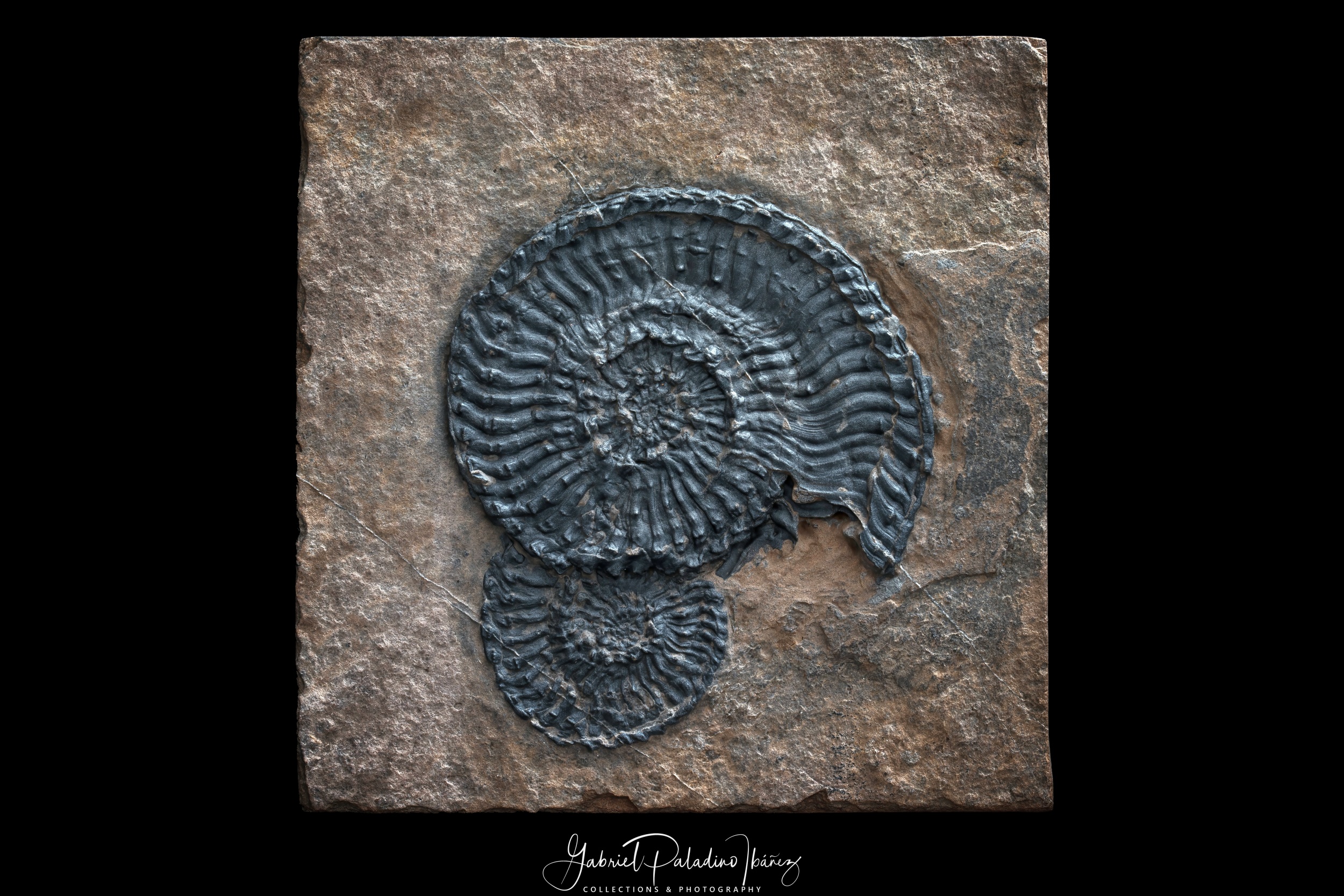
Trachyceras multituberculatum is an impressive ammonite from the Carnian stage of the Late Triassic, found mainly in the marine rocks of Guizhou Province, southern China. Most fossils are discovered in thin layers of limestone and shale, often as single shells or fragments. This species is important for paleontologists because it serves as an “index fossil,” helping to date and compare rock layers across different regions of the ancient Tethys Ocean. The best-known examples come from the Xiaowa Formation, especially the famous fossil sites of Guanling and Xingyi, though a few have turned up in neighboring Yunnan and Sichuan. Finding a complete and well-preserved specimen is quite rare—less than 5% of all finds—but even partial or internal molds are prized, especially when they show the unique bumps and ribs that set this species apart. Most Trachyceras fossils from Guizhou are preserved as shiny, pyritized molds, a sign of the oxygen-poor, deep-water conditions that existed over 230 million years ago.
Scientific classification:
Kingdom: Animalia
Phylum: Mollusca
Class: Cephalopoda
Subclass: Ammonoidea
Order: Ceratitida
Superfamily: Trachyceratoidea
Family: Trachyceratidae
Genus: Trachyceras
Species: Trachyceras multituberculatum
Era: Mesozoic
Period: Triassic (Carnian, ~237–227 Ma)
Origin: Guizhou Province, China
Diameter of the larger pictured specimen: 44 mm
The shell of Trachyceras multituberculatum is thick and disk-shaped, with a somewhat triangular cross-section, flat sides, and an angular edge. It’s easily recognized by its strong ribs and rows of spiny bumps (called tubercles), which make it stand out from other ammonites of the time. These ammonites lived in open marine environments alongside a rich variety of marine reptiles—like ichthyosaurs, thalattosaurs, placodonts, and early turtles—and many other ammonites.
Although the original shell material is gone, the fossils beautifully capture the characteristic ornamentation and fine details of the species. This type of preservation is the most common way Trachyceras fossils are found today—and such specimens remain highly valued, both for their scientific importance and for the unique glimpse they provide into the ancient marine world.
Photo Taken: July 03, 2025
High resolution
Flickr Gallery
Did you like this post?