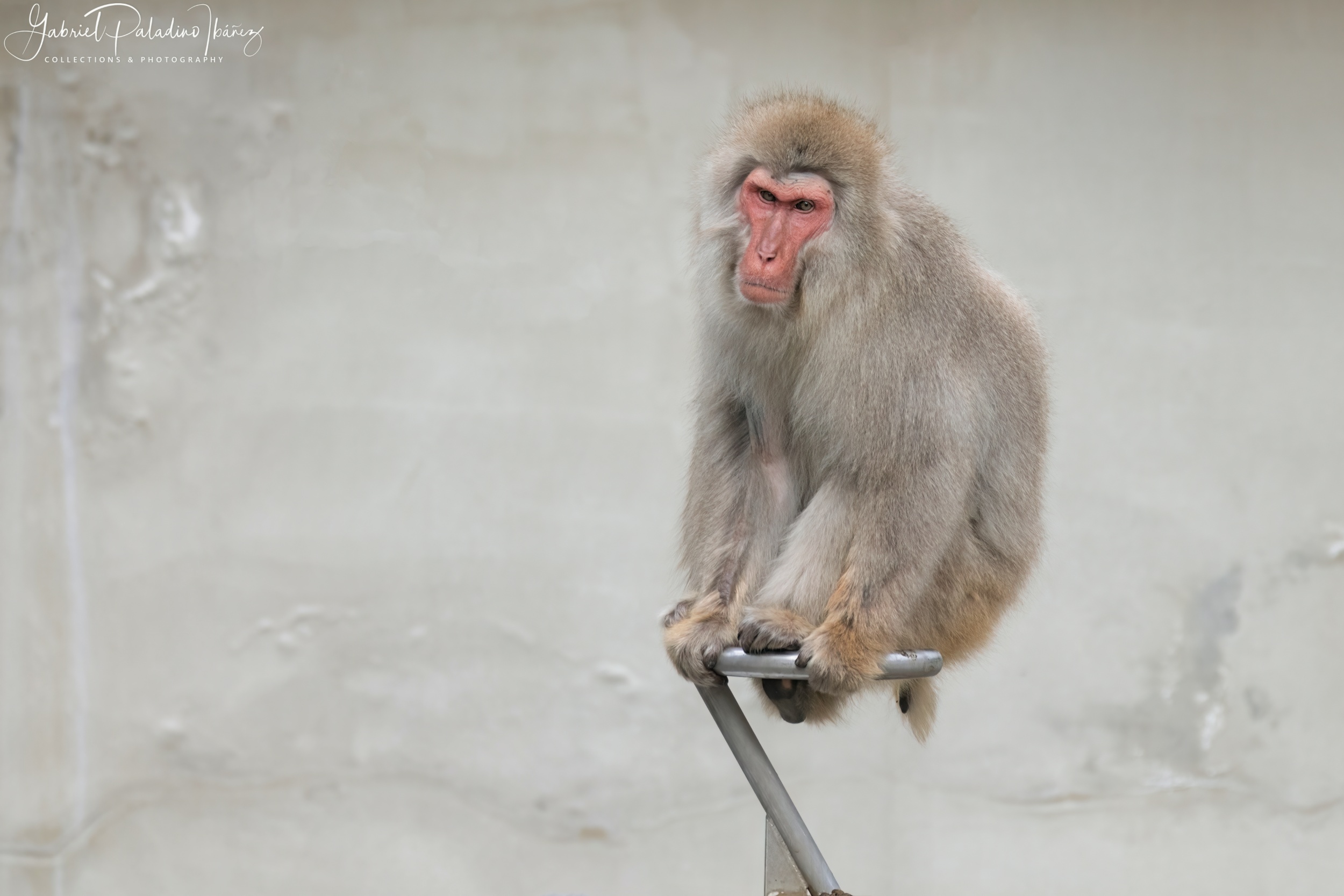
• ニホンザル
• Macaco japones, macaco de cara roja
• Japanese macaque, snow monkey
Scientific classification:
Domain:Eukaryota
Kingdom:Animalia
Phylum:Chordata
Class:Mammalia
Order:Primates
Suborder:Haplorhini
Infraorder:Simiiformes
Family:Cercopithecidae
Genus:Macaca
Species:M. fuscata
Ueno Zoological Gardens, Taito, Tokyo, Japan
The red-faced macaques, also known as Japanese macaques or snow monkeys, are a major attraction at Ueno Zoo. These primates are known for their distinctive red faces and their ability to adapt to cold climates. Despite their resilience to cold, they struggle with extreme heat, as they do not sweat much. This makes them vulnerable during the hot summer months, where temperatures can exceed 40°C in their current concrete habitat.
To address this, Tokyo’s Ueno Zoo is renovating its “monkey mountain,” originally built in 1932, to create a forest-like enclosure with more shade to help the macaques cope with the summer heat. The new habitat will feature artificial trees and materials that do not retain heat, aiming to improve the animals’ welfare by providing a more natural and comfortable environment. This renovation aligns with global trends in animal welfare, focusing on reducing stress and enhancing the well-being of zoo animals.
Details about the renovation of the “monkey mountain” at Ueno Zoo were sourced from NHK.
UPDATE — September 2026
The plans described above ultimately led to the end of Ueno Zoo’s historic “Monkey Mountain” (サル山, Saruyama). On November 19, 2024, the last Japanese macaques were withdrawn from the exhibit, bringing its 92-year history as a public display to an end. The original 1932 structure was subsequently demolished as part of the redevelopment of the site.
The group of 35 Japanese macaques, originally brought from the Shimokita Peninsula in Aomori Prefecture in 2010, was moved to a temporary, non-public enclosure while a new habitat is being designed and constructed. As of June 2026, the zoo had not announced a reopening date or a new public exhibit for the group.
The uppermost section of the original artificial rock was preserved and now stands as a historical marker in front of the Saruyama Kitchen restaurant, leaving a physical remnant of the exhibit photographed here.
Sources:
• The current state of Japanese Macaque that used to live on the monkey mountain
— Tokyo Zoological Park Society, June 25, 2026.
• NHK report preserved by Gnews.jp
— March 27, 2024. The original NHK URL is no longer available.
Photo Taken: April 12, 2024
Did you like this post?