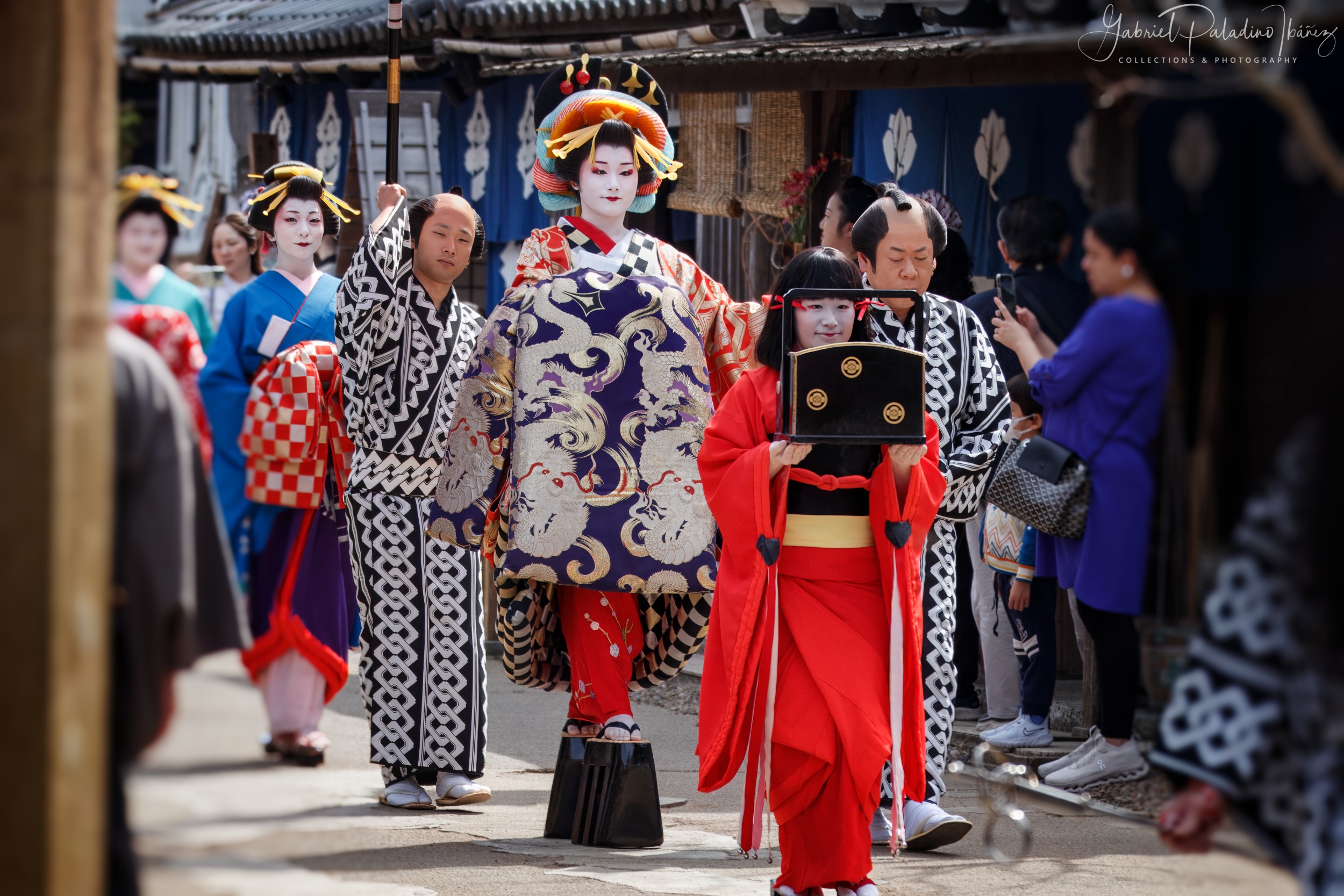
Oiran Dochu is a procession-reenactment of processions done by the oiran, the courtesans of Yoshiwara in Edo Period, with a purpose to advertise the houses they worked in. The reenactment involves men and women dressed up in Edo period costumes.
Back in the Edo Period, Oiran (courtesans in Japan) were classy version of yujo (women of pleasure/prostitutes) that were more entertainers and even celebrities in their village outside the usual pleasure district areas. They were known for their art and fashion trend and were expensive and did not participate in sexual favors but for entertainment for the wealthy.
It’s important to mention that Oiran and Geisha are similar in look, but they are very different.
Geisha perform ancient traditions of art, dance and singing. They were specialized as entertainers and back in the early day, the first geisha were actually men who were customers to see the more popular and gifted courtesans, the oiran.
Female geisha would begin later as teen odoriko (dancing girls) and they were popular paid entertainers in the private homes of upper-class samurai. They were known for their grace.
Oiran are often confused with geisha because they dressed similarly but back then they were high-class yujo. During the Edo Period, laws were passed restricting brothels to pleasure quarters (yukaku), which were walled districts. Yujo were prostitutes that provide sexual favors, the Oiran were courtesans who were entertainers that performed in sado (Japanese tea ceremony), ikebana (flower arranging) and calligraphy. They also learned to play the koto, shakuhashi, tsuzumi and shamisen (all traditional Japanese instruments).
Their prestige was based on their beauty, character, education and artistic ability. They spoke in formal court standards than regular common language and were decorated with pins or combs in their hair or ornamented garments.
But the rise of the geisha ended the era of the oiran. Where oiran performed for clients that were referred to them by certain tea houses or via appointment, they were expensive and there was a waiting list. For geisha, they weren’t as formal and more approachable and what they provided entertainment wise fit the average person’s taste and they were also less expensive than oiran. So, by the 19th century, geisha would replace oiran as the companion of choice of wealthy Japanese men.
The Oiran Dochu Parade at Edo Wonderland is very interesting to see because it’s part of Japanese tradition that you don’t see happening anymore (Bunsui, Niigata still hosts one once a year in April and in Senzoku, which was Yoshiwara back in the day, north of Asakusa in April).
Edo Wonderland 日光江戸村, Kinugawa Onsen, Nikkō, Tochigi, Japan
Photo Taken: April 12, 2024
Did you like this post?